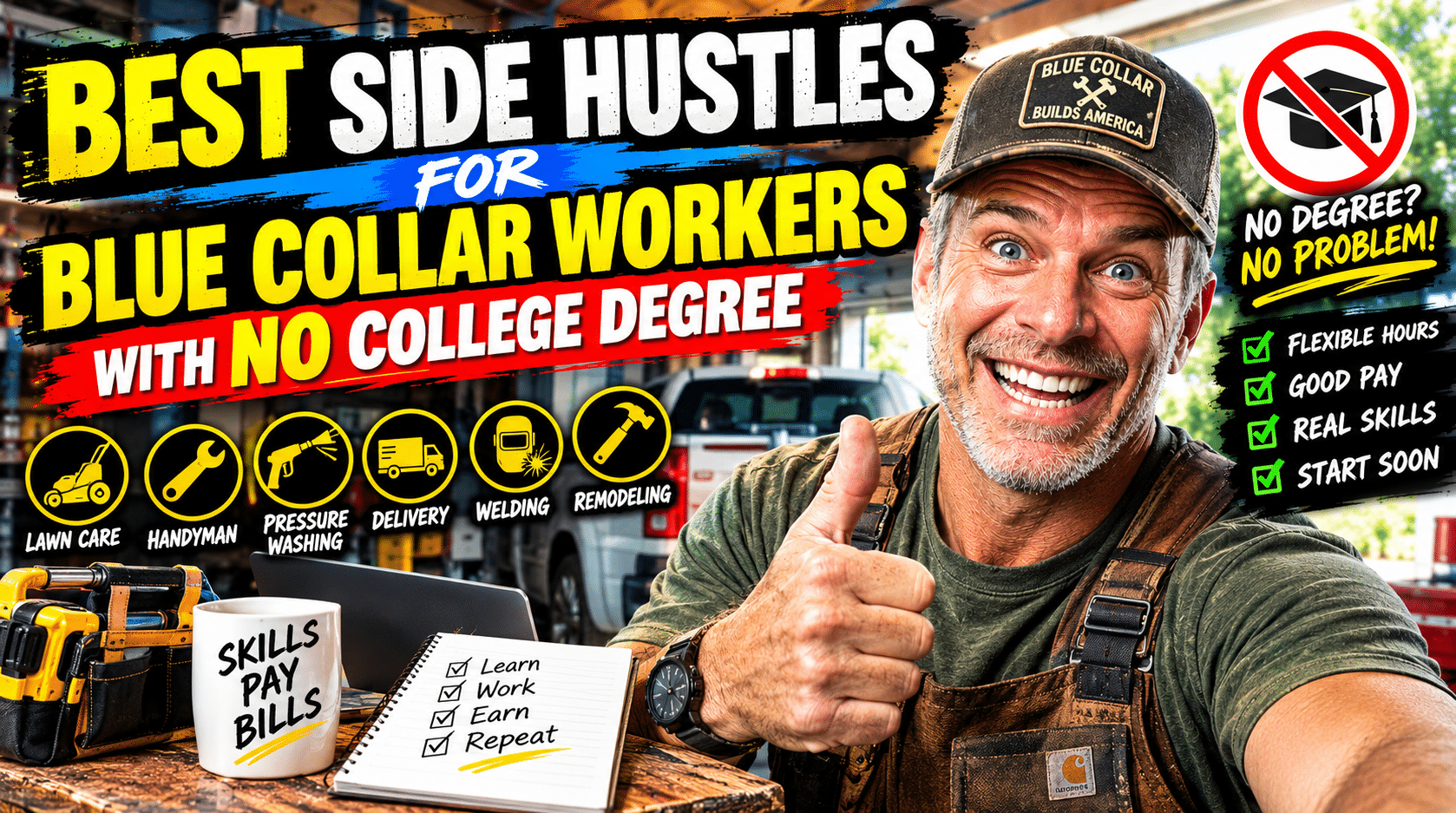

30 Years in Construction: Here’s the Real Math on Wealth
After 30 years in construction from swinging a hammer as a union carpenter to running projects and inspecting at a major auto plant I keep hearing the same question. Guys ask me all the time on JV CHARLES TV: what’s the real math on wealth if you stay in the trades? Not the Instagram version. The actual numbers. So today I’m laying out 30 Years in Construction: Here’s the Real Math on Wealth the way only someone who’s lived it can.
I’ve watched men chase four-year degrees, pile up debt, and still struggle. I’ve also watched quiet, steady tradesmen buy houses cash, put kids through school debt-free, and retire with real assets. The difference almost never comes down to luck. It comes down to understanding the ladder and climbing it on purpose.
Key Takeaways
- You can reach six figures zero debt in the skilled trades faster than most college paths and keep far more of what you earn.
- Current BLS May 2025 data shows plumbers and electricians sitting around the mid-$60k median with top 10% clear over $100k; specialized or self-employed work goes higher still.
- Ownership and specialization not just hours are what separate comfortable living from real wealth.
- Geography, union status, and overtime move the needle more than most people admit.
- The trades still reward people who show up, learn the business side, and avoid lifestyle inflation.
Why the College Math Rarely Beats the Trades Math
I started in the early 90s. Back then people still told kids “you need a degree or you’ll dig ditches.” Fast-forward and a lot of those same kids are buried under student loans while the “ditch diggers” who stuck with it own the trucks, the shops, and the rental properties.
Here’s the simple comparison I use on the channel. A typical four-year degree costs time and money. Even if you work part-time, you’re delaying full earning power. Apprenticeships pay you while you learn. By year four or five a journeyman plumber or electrician is often already at or above the starting salary of many bachelor’s holders and they have zero loan payments dragging them down.
BLS May 2025 numbers (the most recent solid federal data) put national medians like this:
- Plumbers, pipefitters, and steamfitters: $63,800 median
- Electricians: $63,190 median
- HVAC mechanics and installers: $61,010 median
Those are medians. The top 10% for plumbers and electricians both clear roughly $108,000. Elevator installers sit much higher, often north of $100k median. Add overtime, prevailing wage work, or specialty certifications and the picture changes fast.
I’ve known service plumbers in mid-size cities who net $90k–$110k working four days a week with their own van. Commercial HVAC controls guys in the right markets regularly clear six figures. The plumbers pay numbers people quote online usually miss the self-employed and union packages that include strong benefits and pensions.
The Real Wealth Ladder Nobody Talks About on the Job Site
Most guys stop at journeyman. That’s fine if comfortable is the goal. If wealth is the goal, you keep climbing.
Level 1–2: Getting skilled
Helper or apprentice wages feel tight at first. Tools cost money. The early years test you. But every raise is scheduled in a good apprenticeship, and you’re building a skill that cannot be outsourced.
Level 3–4: Journeyman to lead
This is where high paying skilled trades start showing up in real take-home. Foremen and superintendents in construction routinely sit in the $80k–$150k range depending on location and project size. You’re still on the tools or close to them, but now you’re paid for judgment as much as labor.
Level 5 and beyond: Ownership
This is the part that changes everything. A one-man plumbing or HVAC operation with good systems and a steady book can net well into six figures. Scale to a small crew and the numbers move into the low-to-mid six figures personal income for many owners. I’ve watched ordinary guys do it without fancy degrees just by treating the trade like a business instead of just a job.
The highest paying skilled trades almost always share three traits: licensing barriers that limit supply, work that has to happen in person, and clear paths to specialty or ownership. Elevator work, certain industrial electrical niches, and commercial refrigeration are classic examples. Residential service plumbing and HVAC also reward the guys who answer the phone when everyone else is closed.
Geography and the Hidden Variables
National medians hide a lot. Illinois, New York, Alaska, Washington, and parts of New England pay noticeably higher for the same tickets. Cost of living matters, of course. A $95k package in a high-cost city can feel tighter than $75k in a lower-cost one. Still, the opportunity exists.
Union vs non-union also moves the needle. Strong locals often deliver higher base rates plus benefits and retirement contributions that compound over decades. Overtime on big projects or storm work can push annual numbers into serious six-figure territory for the right trades.
How to Actually Build Wealth Instead of Just Making Money
Income is only half the equation. I’ve seen six-figure earners stay broke because every raise went to a bigger truck or a lifestyle they couldn’t sustain. The ones who build real wealth do a few boring things consistently:
- Live on last year’s income while banking the raises.
- Max any retirement match and keep investing even when the market feels scary.
- Use trade skills to sweat equity on their own properties when possible.
- Treat the business (even a one-man shop) like a real company with separate accounts and simple systems.
Blue collar work still lets you see the direct result of your effort. That feedback loop is powerful. You fix the problem, the customer pays, and you go home knowing the work mattered. Over 30 years that compounds in ways that are hard to measure on a spreadsheet.

The Shortage Is Real and It’s Your Advantage
Demand for skilled trades remains strong. Construction needs workers. Existing systems need maintenance. Data centers, manufacturing reshoring, and aging housing stock all keep the phone ringing. AI isn’t crawling under a house to replace a sewer line anytime soon.
If you’re early in your career or thinking about switching, the window is open. Apprenticeships, community college programs, and employer-sponsored training still exist. Some large companies and foundations are putting real money into training pipelines because they need people.
Frequently Asked Questions
Can you really hit six figures in the trades without owning a business?
Yes. Specialized roles, strong union packages, overtime, and high-cost markets make it common for experienced electricians, plumbers, elevator mechanics, and certain HVAC specialists. Ownership just raises the ceiling further.
Is HVAC or plumbing better for money?
National medians currently favor plumbing slightly, but the gap is small. Commercial HVAC controls, industrial refrigeration, and service work with strong recurring revenue can match or beat plumbing numbers. Pick the work you can stick with for decades.
How long does it take to reach solid middle-class or better income?
Many journeymen are there in 4–6 years. Six figures typically takes more experience, specialization, location, or ownership. The path is clearer and usually less debt-heavy than many white-collar routes.
What about the physical toll?
It’s real. Take care of your body early good boots, proper lifting, hearing and eye protection. Many guys move into supervision, estimating, or ownership as the years add up. The skill still pays even when the heavy lifting decreases.
Is it too late to switch if I’m already in my 30s or 40s?
No. I’ve watched people make the switch and build solid second careers. You bring maturity and work ethic that younger apprentices sometimes lack. The math still works if you treat it seriously.
Final Thoughts from the Job Site
After three decades I still believe the trades careers path is one of the most reliable ways for regular people to build real security and wealth without the debt trap. The work is hard. The early years test you. But the math is honest: get skilled, get paid while you learn, climb past the journeyman plateau if you want more, and keep lifestyle inflation in check.
That’s the real math on wealth from 30 years in construction. Not hype. Just the numbers and the patterns I’ve watched play out again and again.
If this helped, share it with someone who’s tired of the college-or-bust message. And check the latest videos on JV CHARLES TV we keep breaking down the practical paths that actually work.
References
- U.S. Bureau of Labor Statistics, Occupational Employment and Wage Statistics, May 2025
- BLS Employment Projections 2024–2034
- NCCER Construction Craft Salary Survey data
- Direct industry observation and conversations across 30 years in construction and related trades