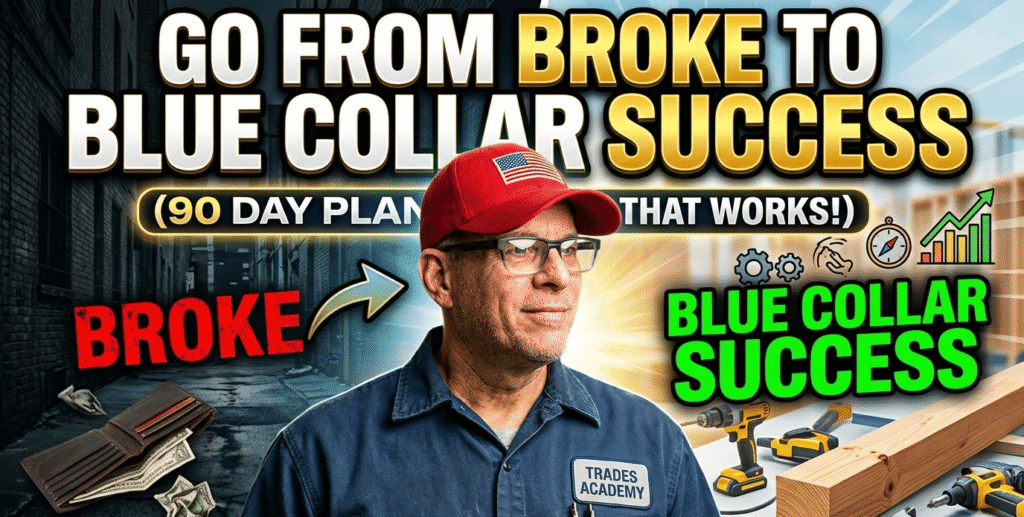
Go From Broke To Blue Collar Success (90 Day Plan That Works!)
Look, if you’re broke, no degree, no connections, and tired of spinning your wheels, the idea of Go From Broke To Blue Collar Success (90 Day Plan That Works!) probably feels too good to be true. I’ve been there watching people in that exact spot. I’m JV CHARLES, founder and senior editor over at JV CHARLES TV, and I’ve talked to enough apprentices, helpers, and guys who built real careers in the trades to know this path actually works when you stop overthinking it.
You don’t need a perfect résumé or a pile of cash. You need 90 days of showing up and doing the basic stuff most people skip.
What You Need to Know Right Up Front
- Plenty of people start with zero experience and land helper work or an apprenticeship paying $18–$25 an hour inside three months.
- Latest BLS numbers (May 2025 data) put plumbers around a $63,800 median. Top guys clear over $108k. Electricians sit right behind them. HVAC techs average about $61k median, but the ones who specialize or run their own service work pull a lot more.
- Free help exists WIOA money, scholarships, cheap certs so money doesn’t have to stop you.
- The real money in high paying skilled trades and the highest paying skilled trades comes later when you get licensed, stack overtime, or start your own crew. A lot of those guys hit six figures zero debt.
- Consistency beats talent every time in the first stretch.
Why This Route Still Makes Sense
College debt keeps climbing and a lot of office jobs feel shaky these days. Meanwhile toilets still back up, AC units still quit in July, and buildings still need power. That work isn’t going overseas.
I’ve watched guys go from living with family and scraping by to owning trucks and houses without a single student loan hanging over them. That’s the blue collar advantage. You’re getting paid while you learn instead of borrowing for four years and hoping it pays off.
The 90-Day Plan That Actually Moves People
This is the same rough outline I’ve seen work over and over. It’s not fancy. It just works if you stick to it.
Week 1: Get Your Resources Lined Up
Stop letting “I don’t have money” be the excuse. First seven days are pure logistics.
Hit your local American Job Center and ask about WIOA funding. A lot of places will cover training, boots, even gas money for trades careers. Fill out the FAFSA even if you think you won’t get anything some trade programs still pull Pell grants. Look up mikerowe WORKS scholarships and any local union or community college help aimed at the trades.
Clean up a simple résumé that shows you can show up on time. Any job, any consistent hours. That’s it.
By the end of the week you should have at least one funding application in and three local apprenticeship or helper openings written down.
Weeks 2–4: Grab the Cheap Credentials That Matter
Employers and apprenticeship boards want to see you’re serious. You don’t need a full certificate yet. You need the quick wins.
Get your OSHA 10 card. It’s cheap or free through workforce centers. Add First Aid/CPR. If a forklift class is nearby, take it. If you’re leaning HVAC, start poking around EPA 608 material so you’re ready when the time comes.
Spend the rest of the time watching free videos on tools and safety, walking past job sites, learning the basic talk so you don’t freeze in an interview. This is the stretch where “I’m interested” turns into “I’ve already started.”
Weeks 5–8: Apply Like Your Rent Depends on It
Now you go wide. Apply to at least three union apprenticeship programs IBEW for electrical, UA for plumbing and pipefitting, plus whatever local covers the other crafts. At the same time chase helper and laborer jobs with regular contractors. Plenty of shops will put a hungry person on a crew while the paperwork for the apprenticeship moves.
Use apprenticeship.gov. Walk into shops early with a printed résumé and a clean attitude. Follow up. Most people never do, and that’s why they stay stuck.
By the end of this stretch you want interviews happening or a temporary labor job putting money in your pocket and hours on your record.
Weeks 9–12: Start Earning and Don’t Screw It Up
Once you’re on a crew the real test starts. Show up early. Keep a little notebook. Ask good questions instead of the same ones twice. Take the dirty jobs without complaining. That’s how helpers turn into apprentices and apprentices turn into the guys who get the overtime first.
A lot of people are already pulling $18–$25 an hour by this point. It’s not six figures yet, but it’s real money, often with benefits, and a clear path forward. Keep stacking whatever certs your shop values and the raises usually follow.

What the Pay Actually Looks Like Once You’re In
Plumbers pay keeps looking solid because the work doesn’t disappear. Experienced plumbers and pipefitters in decent markets clear well above the national median. HVAC guys who move into commercial work or run service routes regularly hit strong five figures and six figures as owners or senior techs. Same story across most of the skilled trades get good, get licensed, take the hard calls, and decide later if you want to stay on the tools or run a crew.
The zero-debt part is what really adds up. You’re earning while you learn. I’ve talked to plenty of guys on the channel who own homes and drive paid-off trucks while their friends with degrees are still renting and making minimum payments.
Stuff That Kills Progress Fast
Waiting for the “perfect” trade before you start. Jumping from one program to another every few weeks. Showing up late or staring at your phone. Ignoring the physical side sleep and water matter more than people think when you’re carrying pipe or crawling in attics. Treating the first 90 days like a temporary gig instead of the start of something.
FAQs
Can I start with zero experience?
Yes. Most apprenticeships and helper jobs are built for beginners. They care more about reliability than what you already know.
How much does the first 90 days cost?
Often under a few hundred bucks if you use the free workforce stuff. Boots, gloves, and the basic cards are the main hits.
Which trade should I pick?
Start with what’s hiring near you and matches how you like to work. Plumbing and HVAC have steady service calls. Electrical has strong growth right now. Talk to a couple local guys and see what feels right.
Is six figures realistic?
For solid journeymen in good markets with overtime or a specialty, yes. For owners who treat it like a real business, it happens all the time. National medians are lower, but the top end is wide open.
What if I bomb the first apprenticeship test?
Retake it. Most places let you. Keep working as a helper in the meantime so you’re still earning and learning.
References
- U.S. Bureau of Labor Statistics, Occupational Employment and Wage Statistics, May 2025 data
- Industry wage summaries pulling from the same BLS numbers for plumbers, electricians, and HVAC
- apprenticeship.gov and local workforce boards for WIOA and registered programs
- Real pay ranges shared by contractors and apprentices across different markets