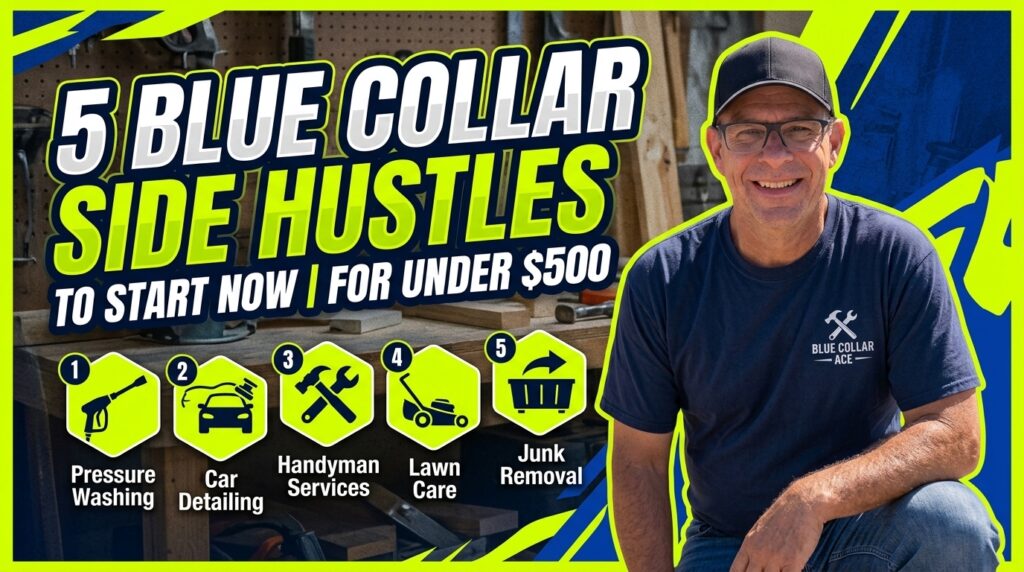
5 Blue Collar Side Hustles To Start Now – For Under $500
Most tradesmen I know already own the tools, the truck, and the know-how. They just never put them to work after the main job ends. After 30 years in the field I keep seeing the same pattern: the guys who build real extra income don’t wait for perfect conditions. They start small with what they have. That’s why I’m laying out 5 Blue Collar Side Hustles To Start Now – For Under $500 the same way I talk about them on JV CHARLES TV practical, no-hype, and built for people who already work with their hands.
You don’t need a loan or a business degree. You need a weekend, a few hundred bucks at most, and the willingness to post your first offer.
Key Takeaways
- All five options can launch for $500 or less if you already own basic tools or a truck.
- Handyman work, pressure washing, and similar services routinely pay $50–$150 per hour once you get rolling.
- Many of these scale from weekend cash into full six figures zero debt businesses when treated seriously.
- Word-of-mouth, Nextdoor, and Facebook Marketplace still beat expensive ads for the first clients.
- Liability insurance and a simple business license are usually the biggest “must-do” costs don’t skip them.
1. Handyman Work – The On-Ramp Almost Everyone Underestimates
If you already carry a basic tool set, this one costs almost nothing beyond a business license, basic liability insurance, and a stack of cards or a simple Facebook listing. Total under $500 in most places.
Start by telling neighbors, coworkers, and people at church or the kids’ school that you handle small repairs on weekends: leaky faucets, ceiling fans, drywall patches, door adjustments, TV mounting, and deck board swaps.
A single Saturday of three or four small jobs can clear $400–$800. Once people trust you, they call again and refer friends. That is how it stops being a side hustle and becomes a real book of business. Plenty of full-time handymen who started this exact way now clear solid six-figure revenue with one or two helpers.
2. Pressure Washing and Exterior Cleaning
A decent gas pressure washer runs $300–$500. Add a few surface-cleaner attachments, some solution, and insurance and you are in business for under the limit if you shop smart or already own one.
Driveways, sidewalks, decks, fences, house siding, and commercial storefronts all need cleaning. A typical residential driveway or patio job pays $150–$400 and takes a couple of hours. Two or three jobs on a Saturday put real money in the pocket.
The work looks dramatic (before-and-after photos sell themselves) and the equipment lasts. Many operators who began part-time now run crews and pull in well over six figures. Add gutter cleaning as a seasonal upsell and the same customer base keeps calling.
3. Mobile Detailing
You already have a truck or van. A solid starter kit vacuum, polisher, chemicals, microfiber towels, and a portable water tank—fits under $500 if you buy used or mid-grade gear.
Interior and exterior packages commonly run $100–$300 per vehicle. Fleet work (construction company trucks, real-estate agent cars) creates steady weekly income. Neighborhood groups and workplace parking lots are natural hunting grounds.
The beauty is low overhead and repeat customers. Once a few people see the results, the phone starts ringing without paid ads. Scale by adding ceramic coatings or partnering with other blue collar shops for referral work.
4. Gutter Cleaning and Basic Exterior Maintenance
Ladder, gloves, a good scoop or blower attachment, and maybe a small pressure-washer attachment keep total startup well under $500 for most guys who already own the basics.
Homeowners hate climbing ladders. A typical single-story house can pay $150–$300. Bundle it with light debris removal or downspout checks and the ticket rises. Spring and fall are peak seasons, but many areas have year-round demand after storms.
This pairs perfectly with pressure washing. One customer often becomes two services. Keep the route tight and you can clear strong weekend numbers without burning out.
5. Small Equipment or Tool Rental (From What You Already Own)
Clean up the tools and equipment sitting in your garage or truck that you only use occasionally concrete saw, generator, plate compactor, extra ladders, or specialty tools. Photograph them well and list on Facebook Marketplace or local rental groups.
Daily rates of $40–$100 per item add up fast with almost zero extra cost. A few consistent renters turn idle assets into cash. Some guys later expand into a small trailer of rental gear and keep the side income flowing while still working their main trades careers.
The key is clear communication, deposits, and simple written agreements. Treat every rental like a professional transaction and the reputation builds itself.
How These Turn Into Something Bigger
Every one of these starts as weekend cash. The moment you track jobs, get a business bank account, carry proper insurance, and start saying “we” instead of “I,” it stops being a side hustle. That is the exact path many owners of high paying skilled trades service companies followed small jobs, clean work, reliable follow-up, then growth.
Compare that to sitting on the tools for overtime that disappears into taxes and lifestyle creep. These hustles let you keep more of what you earn and build equity in a real operation.

Practical First Steps That Actually Work
- Get basic liability insurance before the first paid job.
- Post specific offers (“TV mounting and cord concealment this weekend” beats “handyman available”).
- Take before-and-after photos and ask every happy customer for a short review.
- Price for the value, not just the hours.
- Keep the main job solid while the side income grows don’t quit until the numbers prove it.
I’ve watched ordinary tradesmen use exactly these moves to create extra income that eventually replaced or surpassed their day rate. The ones who succeed treat the side work with the same professionalism they bring to the main job site.
If you already have the skills that keep plumbers pay and HVAC techs busy during the week, you already have the foundation. The only missing piece is putting those skills to work on your own terms for a few hours on the weekend.
Pick one. Start this week. Document the first jobs. Adjust. That is how skilled trades people quietly build real wealth without waiting for permission.
Share this with a buddy who keeps saying he wants extra income but never starts. And check the latest breakdowns on JV CHARLES TV we keep showing the practical paths that actually work in the real world.
Frequently Asked Questions
Do I need a special license for these?
It depends on your state and the exact work. Handyman work and pressure washing often need only a basic business license and insurance. Always check local rules before taking paid jobs.
How fast can I make the first $500?
Many people book their first paid job the same weekend they post. Two or three solid jobs can clear $500–$1,000 in a single Saturday once the pipeline starts.
Which one scales the easiest?
Pressure washing and handyman work both have clear paths to hiring help and raising prices. Detailing and gutter work also scale well with routes and recurring customers.
What if I already work long hours in the trades?
Start with one or two jobs per weekend. Protect your body and your main job. The side income should add options, not create burnout.
Is insurance really necessary at the start?
Yes. One claim can wipe out months of profit and more. Basic liability is usually affordable and non-negotiable for professional work.
References
- Current market rates and startup cost ranges drawn from active operator reports and service-business data in 2025–2026
- Direct observation of tradesmen who launched and scaled these exact models
- Common local licensing and insurance requirements across typical U.S. markets
- Practical patterns shared across years of field experience and channel discussions