Electrician Apprenticeship or Trade School? (Real Numbers)
Electrician Apprenticeship or Trade School? That’s the question I hear all the time from folks tuning into JV CHARLES TV, wondering how to break into one of the best high paying skilled trades without burying themselves in debt. I’m JV Charles, founder and senior editor here, and after years of chatting with electricians, apprentices, journeymen, and contractors on the channel, I’ve seen what actually works in 2026.
If you’re eyeing Trades Careers and dreaming of Six Figures Zero Debt in the blue collar world, this breakdown uses the freshest numbers to help you choose. Whether it’s stacking hours through a paid apprenticeship or hitting the books at trade school first, both paths feed into Skilled Trades that deliver solid pay but one usually edges out for long-term wins.
Key Takeaways Right Up Front
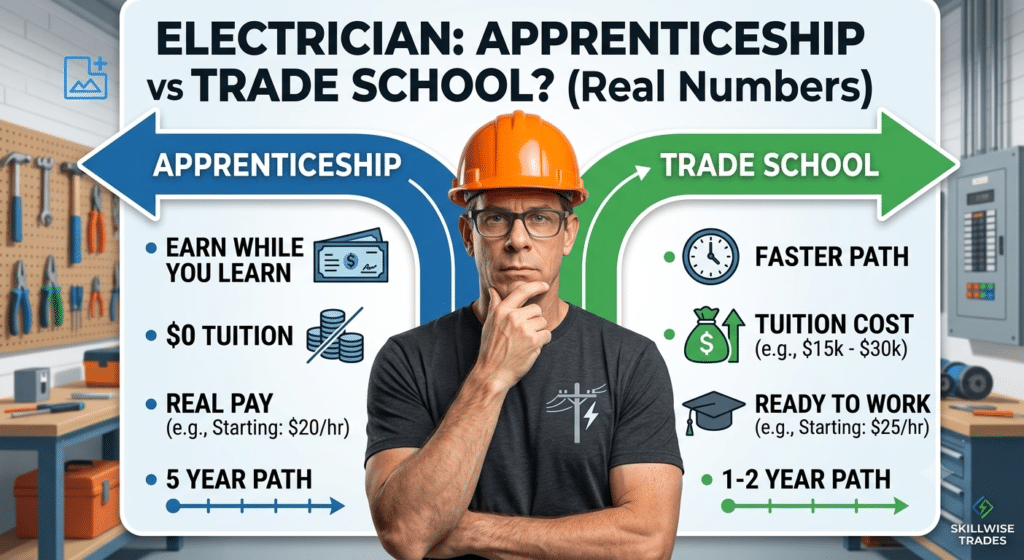
- Apprenticeships win for most people: You get paid from day one (often $18–$25/hour starting), zero tuition, and direct hours toward your journeyman license.
- Trade school gets you basics faster (6–24 months) but costs $5k–$30k and still requires apprenticeship hours for full licensing in most states.
- Electricians hit national medians around $62k–$63k, with journeymen and specialists clearing $80k–$100k+ easily.
- Union programs (like IBEW) often pack the best benefits and raises.
- Both support highest paying skilled trades lifestyles, but apprenticeships keep you debt-free while building real experience.
Why Electricians Remain a Top Blue Collar Bet in 2026
I’ve said it on JV CHARLES TV plenty: Electricians are crushing it amid construction booms, data centers, renewables, and aging infrastructure. Median pay sits strong, job growth beats average, and you control your trajectory residential service, commercial installs, industrial, or even your own crew.
No college degree needed. Just hustle, smart training, and time on the tools.
Apprenticeship Deep Dive: Earn While You Learn
This is the classic route for a reason. You work full-time under licensed pros, log those required on-the-job hours (typically 8,000+), and mix in classroom time on code, safety, and theory.
Real Numbers for 2026:
- Starting pay: $18–$25/hour (40–50% of journeyman rate), which shakes out to $35k–$50k+ in year one depending on location and union status.
- Raises every 6–12 months or per 1,000 hours many hit $30+/hour by year 4.
- Total time: 4–5 years to journeyman.
- Cost: Usually $0 tuition. You might cover tools, books, or small fees, but employers or programs often help.
Union JATC programs through IBEW/NECA stand out with solid benefits health, pension, annuity right away. Non-union options via IEC or ABC give more flexibility with contractors.
Pros: Real-world skills, income from jump, job placement baked in, no student loans dragging you down on the road to Six Figures Zero Debt.
Cons: Competitive to get in (applications, interviews, sometimes tests), longer timeline, and physical work starts immediately.
Trade School Route: Faster Theory, But Still Need Hours
Trade schools or community college programs pack electrical theory, labs, blueprint reading, and safety into a structured setting. Great if you want basics before jumping on sites or need a quicker classroom foundation.
Real Numbers:
- Duration: 6–24 months for certificate/diploma.
- Cost: $5k–$30k total (community colleges cheaper; private higher). Financial aid, grants, or GI Bill can offset.
- After graduation: Enter as a helper or apprentice. Many programs articulate hours toward apprenticeship requirements, but most states still demand full supervised experience for licensing.
Pros: Structured learning, faster initial credential, good for career changers or visual learners.
Cons: Upfront cost (even with aid), no pay during school, and you still need apprenticeship time for full journeyman status.
Head-to-Head: Which Path Wins for Electricians?
From what I’ve gathered talking to guys in the field and digging into 2026 data, apprenticeship usually rules for electricians. You avoid debt, earn steadily, and graduate ready to test for your license with real hours under your belt. Trade school shines as a supplement do it first if you can’t land an apprenticeship slot right away or want theory confidence.
Cumulative earnings favor apprentices big time. After 5 years, you’re often $50k+ ahead versus paying for school then starting lower.
Hybrid? Some do short trade school then apprenticeship for a strong start.
How to Land the Right Path and Scale to Six Figures
- Research local options: Use apprenticeship.gov, IBEW locals, or trade schools.
- Prep your application: High school diploma/GED, clean record, mechanical aptitude.
- Build experience: Helper roles or pre-apprenticeship if needed.
- Specialize later: Solar, EV charging, industrial, controls these boost pay fast.
- Go independent: Many journeymen start crews and hit six figures consistently.
Whether apprenticeship or trade school, electricians fit perfectly into high paying skilled trades with strong demand.

Real Talk from the Channel
On JV CHARLES TV, viewers share stories of apprentices buying homes debt-free by their mid-20s and trade school grads accelerating once they stack hours. The key? Pick what matches your life now but commit long-term.
Skilled Trades like this beat the old college script every time if you show up ready to work.
What’s your take apprenticeship all the way or trade school starter? Comment below and subscribe for more breakdowns on plumberspay, hvac, and other blue collar wins.
FAQs
Q: Is apprenticeship better than trade school for electricians?
A: Yes for most paid training and direct licensing path win out.
Q: How much do apprentices earn starting out?
A: $18–$25/hour typically, scaling up quickly.
Q: Do you need trade school before apprenticeship?
A: No, but it can help and sometimes shortens requirements.
Q: Can you hit six figures as an electrician?
A: Absolutely journeymen, masters, specialists, and business owners do it regularly.
References
- BLS Occupational Employment and Wage Statistics (2025–2026 data).
- Industry insights from IBEW/NECA, trade school comparisons, and apprenticeship program reports.
JV Charles, Founder & Senior Editor, JV CHARLES TV. Keeping it real so you can build that debt-free future.