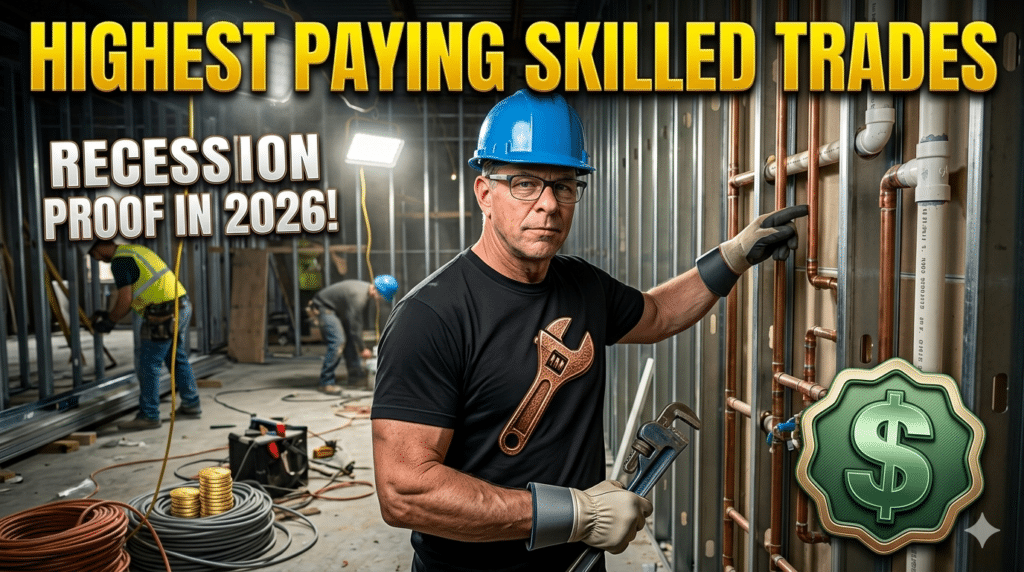
Highest Paying Skilled Trades That Are Recession Proof in 2026
By JV Charles Founder and Senior Editor, JV CHARLES TV
If you are searching for the highest paying skilled trades that are recession proof in 2026, the latest data and real stories from the field point to one clear conclusion: essential blue collar careers in the skilled trades continue to deliver exceptional compensation, job security, and a debt-free path to financial independence. While headlines often focus on tech layoffs or office-sector uncertainty, trades professionals who keep water flowing, power running, buildings safe, and indoor environments comfortable remain in steady demand.
At JV CHARLES TV we have spent years speaking directly with plumbers, HVAC technicians, electricians, elevator mechanics, and power-line workers across the country. Their experiences consistently show that when economic conditions tighten, the need for these hands-on skills does not disappear. In fact, it often intensifies. This guide examines the top recession-resistant options, current salary realities, and practical routes to six figures zero debt that thousands are already following.
Key Takeaways
- Elevator installers and repairers currently lead with a BLS median salary of $106,580, driven by specialized technical expertise and non-negotiable safety requirements.
- Core trades such as plumbing, electrical work, and HVAC demonstrate strong recession resistance because repairs and maintenance cannot be postponed indefinitely.
- Paid apprenticeships allow new entrants to earn while they learn, eliminating student debt and accelerating the timeline to strong earnings.
- Labor shortages exceeding 400,000 unfilled positions in 2026 create leverage for certified professionals seeking higher pay, overtime, or business ownership.
- Specialization, union membership, commercial work, and entrepreneurship consistently push total compensation into six figures for dedicated tradespeople.
Why Skilled Trades Remain Resilient in 2026
The U.S. skilled trades workforce faces a persistent shortage caused by an aging generation of workers retiring faster than new talent enters the pipeline. Infrastructure legislation, data-center construction, extreme weather patterns, and ongoing residential and commercial development sustain demand even during slower economic periods.
Unlike roles that can be automated or offshored, most skilled trades require on-site presence, real-time problem solving, and physical dexterity. A burst pipe in a hospital, a failed elevator in a high-rise, or a data center cooling system that must stay operational does not wait for economic recovery. These realities underpin the long-term stability of #TradesCareers in plumbing, HVAC, electrical, and related fields.
Top Highest Paying Recession-Proof Skilled Trades
Here are the standout options based on 2026 salary data, projected demand, and proven resilience.
Elevator and Escalator Installers and Repairers
Median annual wage: $106,580 (BLS) Top earners frequently exceed $130,000–$150,000 with overtime and premiums.
This trade consistently ranks at or near the top of highest paying skilled trades lists. Mechanics combine electrical, mechanical, and hydraulic knowledge to install, maintain, and repair vertical transportation systems. Strict safety codes and the critical nature of the work create high barriers to entry and correspondingly strong compensation. Demand remains steady because every multi-story building requires ongoing inspection and service.
Entry path: 4–5 year paid apprenticeship through programs such as the National Elevator Industry Educational Program (NEIEP). Strong math and mechanical aptitude help.
Power-Line Installers and Repairers
Median annual wage: Approximately $82,000–$92,000, with experienced lineworkers and those working storm restoration often clearing well into six figures through overtime.
These professionals maintain and repair electrical transmission and distribution systems. The work involves heights, high voltage, and sometimes emergency response after storms. Hazard pay and frequent overtime opportunities elevate earnings significantly.
Recession resistance: Utilities must keep the grid operational regardless of economic conditions. Infrastructure upgrades and renewable energy integration add further demand.
Entry path: 4–5 year apprenticeship, often union-sponsored, with emphasis on safety training and physical conditioning.
Plumbers, Pipefitters, and Steamfitters
Median annual wage: Approximately $62,000, though experienced journeymen and master plumbers in commercial or industrial settings routinely earn $85,000–$120,000+. Business owners frequently exceed $150,000–$200,000.
Plumbers pay stays robust because water, gas, and drainage systems require constant maintenance and new construction continues. Specialized work in medical facilities, manufacturing plants, or fire suppression systems commands premium rates.
Recession resistance: Pipes leak and systems fail on their own schedule. New housing, hospital construction, and industrial projects sustain steady workflow.
Entry path: 4–5 year apprenticeship combining classroom and on-the-job training, followed by state licensing. Many begin as helpers and advance quickly.
Electricians
Median annual wage: Approximately $61,000–$62,000, with industrial, commercial, and master electricians often reaching $85,000–$120,000+ through specialization and overtime.
Work spans residential service, new construction, industrial controls, EV charger installation, and smart-building integration. The rise of data centers and renewable energy projects has expanded opportunities.
Recession resistance: Power infrastructure, building codes, and safety requirements do not pause during downturns. Emergency service calls provide additional income stability.
Entry path: 4–5 year apprenticeship or trade-school-plus-apprenticeship route, followed by state licensing and ongoing continuing education.
HVAC Technicians
Median annual wage: Approximately $59,000–$61,000, with commercial technicians, those holding advanced certifications (NATE, EPA Section 608), and business owners frequently achieving $80,000–$110,000+.
HVAC work encompasses installation, maintenance, and repair of heating, ventilation, air conditioning, and refrigeration systems. Data centers, hospitals, and manufacturing facilities require precise climate control, while extreme weather events drive residential and light-commercial demand.
Recession resistance: Climate control is essential for health, productivity, and equipment protection. The expansion of temperature-sensitive industries such as pharmaceuticals and electronics adds structural demand.
Entry path: 6–24 month programs at trade schools or community colleges, followed by apprenticeships and certifications. Some technicians enter through helper roles and earn while advancing.
How to Reach Six Figures with Zero Debt
The combination of paid apprenticeships, rapid skill acquisition, and multiple income levers makes six figures zero debt achievable for motivated individuals. Many tradespeople finish training in their early to mid-twenties with positive net worth and begin building equity through homeownership or business investment years ahead of typical college graduates.

Proven levers for higher earnings:
- Pursue commercial, industrial, or specialized work (hospital plumbing, process piping, industrial controls, mission-critical HVAC).
- Obtain additional certifications and licenses.
- Work overtime or emergency/on-call rotations.
- Join a union for negotiated wages, benefits, and training.
- Start or scale a service business many master plumbers, electricians, and HVAC contractors clear six figures as owners.
- Relocate strategically or accept travel assignments for premium pay.
Common Myths About Skilled Trades Careers
Myth: These jobs offer low pay and limited advancement.
Reality: Median figures represent starting or average workers. Dedicated professionals who specialize and advance routinely surpass six figures.
Myth: The work is purely physical and will be replaced by robots.
Reality: While tools evolve, on-site diagnostics, code compliance, customer interaction, and complex troubleshooting remain human-centered. AI assists; it does not replace the craft.
Myth: You need a four-year degree for a “good” career.
Reality: The trades deliver faster entry to strong earnings, lower total education cost, and often superior lifetime net worth when debt is factored in.
Practical Steps to Begin in 2026
- Visit Apprenticeship.gov or your state apprenticeship office to identify registered programs.
- Research local trade schools and community college programs for shorter certificate routes in HVAC or electrical work.
- Contact unions (IBEW for electrical, UA for plumbing and pipefitting, SMART for sheet metal/HVAC) for information sessions.
- Secure entry-level helper or laborer positions to gain site experience while applying to formal training.
- Build a basic toolkit, obtain necessary safety certifications (OSHA 10 or 30), and maintain a clean driving record.
Frequently Asked Questions
What is currently the single highest-paying skilled trade?
Elevator and escalator installers and repairers hold the top median position at $106,580 according to the most recent BLS data, with experienced mechanics earning substantially more.
Are these trades truly recession-proof?
While no career is immune to every economic variable, essential services such as plumbing repairs, electrical maintenance, HVAC service, and elevator safety inspections remain necessary. Historical patterns and current labor shortages support strong resilience.
How long does it typically take to reach six-figure earnings?
Many apprentices reach journeyman status and solid five-figure pay within 4–5 years. With overtime, specialization, or business ownership, six figures often arrive in the late twenties to mid-thirties for those who stay focused.
Do I need exceptional physical strength?
Physical capability helps, but technique, proper lifting practices, and mechanical advantage tools matter more. Many successful tradespeople work into their fifties and sixties by working smart and maintaining fitness.
Which trade offers the fastest path for someone with no experience?
HVAC and plumbing frequently allow quicker entry through shorter certificate programs or helper roles that transition into apprenticeships. Electrical work and elevator mechanics usually involve longer, more structured training.
How do these careers compare financially to a traditional college degree?
When accounting for zero or low student debt, earlier earnings, and strong demand, many trades professionals accumulate greater net worth by their early thirties than peers carrying college loans.
References
- U.S. Bureau of Labor Statistics, Occupational Employment and Wage Statistics and Occupational Outlook Handbook (May 2024 data referenced in 2026 analyses), including Elevator and Escalator Installers and Repairers profile.
- Elite Trade Institute, “15 Highest Paying Trade Jobs in 2026 (With Salary Data)” (March 2026).
- Forbes, “15 Skilled Trades With The Highest Pay And Growth Potential” by Luciana Paulise (June 2026).
- Additional cross-referenced reporting from trade education sources and industry analyses on labor shortages, apprenticeship outcomes, and sector demand through mid-2026.