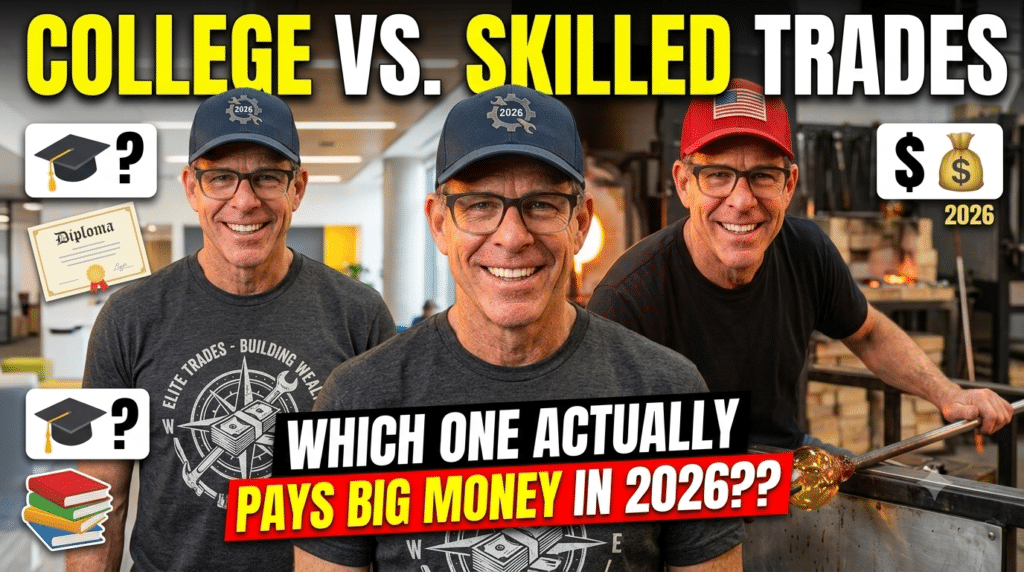
College vs. Skilled Trades – Which One Actually Pays BIG MONEY In 2026??
College vs. Skilled Trades – Which One Actually Pays BIG MONEY In 2026?? That’s the question I keep hearing from folks my age and younger who are fed up with the same old script. I’m JV Charles, founder and senior editor at JV CHARLES TV. After 30 years in the trenches as a union carpenter, project manager, and now a UAW inspector, I’ve seen both sides of this debate up close. And let me tell you, the numbers in 2026 are painting a pretty clear picture if you’re willing to look past the hype.
Too many people are still chasing that college dream, racking up massive debt, only to land in jobs that don’t even cover the bills. Meanwhile, folks diving into Skilled Trades or targeted programs are building Six Figures Zero Debt lifestyles way faster. Let’s break it all down, no fluff, just real talk from someone who’s lived it.
Key Takeaways
- High paying skilled trades often deliver stronger early-career ROI than many bachelor’s degrees, especially when you factor in zero-to-low debt.
- College grads face average student loans around $35K–$40K, while trade paths cost a fraction and get you earning sooner.
- Blue collar roles like HVAC, plumbing, and electrical are hitting strong wages with massive demand due to shortages.
- Trades Careers provide tangible skills, job security, and paths to ownership that beat underemployed degree holders.
- Highest paying skilled trades can outperform mid-tier college outcomes in the first 10–15 years for many people.
The College Promise vs. The Reality in 2026
We’ve all heard it: “Go to college, get a good job, live happily ever after.” But the script flipped years ago. Average total cost for a four-year degree, including everything, can top $120K–$250K depending on the school. Graduates walk out with around $35K–$39K in debt on average, and starting salaries for many majors hover in the $40K–$60K range sometimes less after taxes and loans.
Worse, underemployment is real. Plenty of degree holders end up in retail or unrelated gigs while paying off loans for decades. Interest piles up, delaying houses, families, and real financial freedom. I’ve talked to too many people in their 30s still digging out from that hole.
Why Skilled Trades Are Crushing It Right Now
On the flip side, Skilled Trades are booming because of a historic labor shortage. Boomers retiring, infrastructure projects everywhere, e-commerce growth, data centers ou name it. Companies can’t find enough qualified workers, so pay is climbing fast.
You can train in weeks or months through apprenticeships, vocational programs, or focused online courses. Many pay you while learning. No massive upfront debt. And the work? It’s real. You build, fix, and maintain the world around us.
Plumberspay, for example, starts solid and scales quick. Same with HVAC techs handling modern efficient systems. Electricians wiring everything from homes to industrial sites. These aren’t dead-end jobs they’re careers with ladders to management, specialization, or your own business.
Head-to-Head: Cost, Time, and Earnings Breakdown
Upfront Investment
- College: $30K–$250K+ total. Years of opportunity cost (no full-time earnings).
- Trades: $5K–$20K typical for programs or certs. Many apprenticeships are free/paid. You start earning in 6–18 months.
Early Career Earnings
Many high paying skilled trades hit $50K–$70K starting or within a couple years, with overtime and progression pushing higher. College averages vary wildly by major STEM or nursing do well, but others lag. Over the first decade, trades often win on net worth because you’re not servicing huge loans.
Long-Term Potential
College can lead to six figures in professional fields, but trades get there too master plumbers, HVAC business owners, project managers, specialized electricians. Plus, blue collar entrepreneurship is straightforward: vans, tools, clients.
Spotlight on Strong Trades Options in 2026
HVAC technicians: Essential for comfort and efficiency. Training via short programs or apprenticeships. Good pay with certs like EPA 608, and commercial work boosts it higher.
Plumbers: Recession-proof. Install and repair systems everyone needs. Journeyman status unlocks serious money and independence.
Electricians, construction managers, and even roles like supply chain coordinators blend trades thinking with logistics—often accessible with quick training and paying $60K+ starting without the degree debt.
These highest paying skilled trades give you options: hands-on, tech-heavy, leadership. Flexibility that generic degrees don’t always match.
The Hidden Costs College Doesn’t Mention
Stress, delayed life milestones, mental health hits from debt. Trades let you work with your hands or mind, see immediate results, and often enjoy better work-life balance once established. Physical demands exist, but so do office burnout and layoffs in white-collar worlds.
I’ve mentored folks who switched later in life and wished they’d done it sooner. Maturity is an asset in the trades.
Making the Smart Choice for You
It depends on you. Love abstract learning, research, or specific professions like medicine/law? College might fit. Want faster freedom, practical skills, and Six Figures Zero Debt potential? Look hard at Trades Careers.
Research local demand, talk to people in the field, try intro courses. Don’t follow the crowd follow the math and your gut.

Pros and Cons Summary
Trades Path Pros: Speed, low debt, high demand, tangible skills, entrepreneurship. Cons: Physical in some roles, licensing requirements, variable hours.
College Pros: Broad knowledge, networking, certain high-prestige paths. Cons: Cost, time, uncertain ROI for many majors.
FAQs
Do skilled trades really pay more than college in 2026? \
For many paths, yes especially early on and net of debt. Top trades compete with or beat average degree outcomes.
What’s the debt difference?
Trades often under $10K–$15K total vs. $35K+ for bachelor’s. Huge head start.
Can I switch to trades later?
Absolutely. Many do successfully in their 30s, 40s, even 50s.
Are there high-paying options beyond traditional blue collar?
Yes project management, drafting, supply chain, estimating. Blends of skills.
How do I start in Skilled Trades?
Apprenticeships, short programs, certs. Resources like CourseCareers help fast-track.
References
- Bureau of Labor Statistics and industry wage data 2025–2026
- Student debt statistics from Education Data Initiative
- Personal experience and stories from JV CHARLES TV community
- Training program outcomes and labor market reports