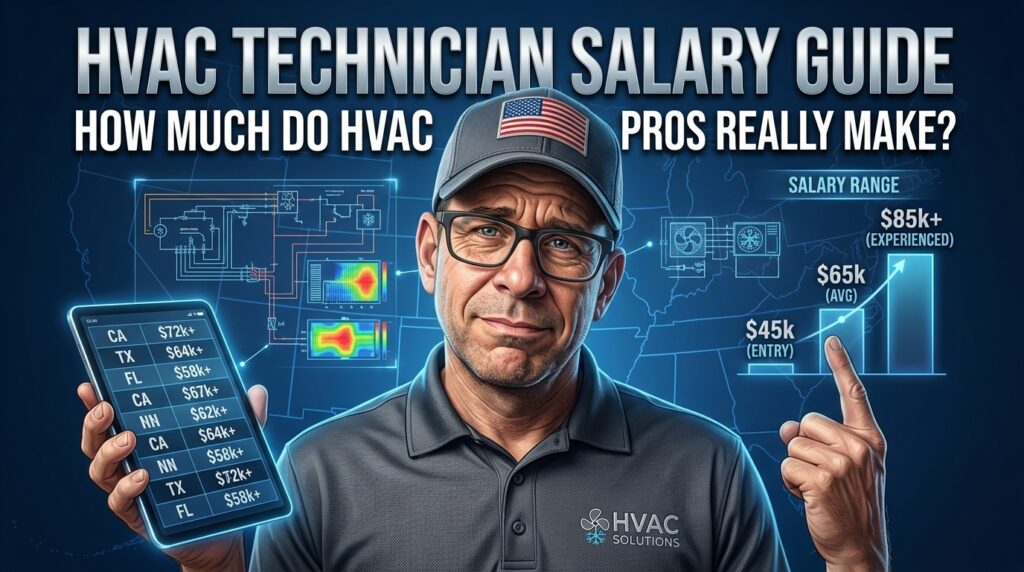
HVAC Technician Salary Guide: How Much Do HVAC Pros Really Make?
If you’ve been scrolling late at night wondering whether the HVAC Technician Salary Guide: How Much Do HVAC Pros Really Make? actually holds up in 2026, you’re in the right place. I’m JV Charles, founder and senior editor over at JV CHARLES TV. I’ve spent more than three decades in the field watching guys come out of high school or dead-end jobs and build real money in the skilled trades without a mountain of student loans. This isn’t some polished corporate report. It’s the straight talk I give the men and women who watch my channel every week.
Key Takeaways
- National median for HVAC technicians sits at $61,010 a year ($29.33 an hour) according to the latest BLS May 2025 data.
- Top 10% clear more than $95,210, and plenty of specialized or self-employed techs push past six figures.
- Location, certifications (EPA 608 + NATE), commercial experience, and overtime make the biggest difference.
- Compared to plumbers pay, HVAC starts a little lower for many but offers faster entry and strong overtime potential in extreme weather markets.
- You can still hit Six Figures Zero Debt in this trade if you treat it like a career instead of just a job.
What the Latest Numbers Actually Say
The Bureau of Labor Statistics doesn’t sugarcoat it. As of the May 2025 Occupational Employment and Wage Statistics, heating, air conditioning, and refrigeration mechanics and installers (that’s the official title for most of us) had a median annual wage of $61,010. Mean sits a bit higher around $64,780 because the top guys pull the average up.
Break it down by percentile and it gets more interesting:
- Bottom 10%: under $40,050
- 25th percentile: about $48,360
- Median: $61,010
- 75th percentile: roughly $77,060
- Top 10%: over $95,210
That’s base wage and salary. Overtime, on-call premiums, tool allowances, and bonuses are common, especially in residential service during heat waves or deep freezes. I’ve talked to guys who added $15,000–$25,000 just from summer call-outs last year.
How Experience Moves the Needle
Experience is the fastest lever most techs control.
Entry-level / helper / first couple years
Most start between $40,000 and $52,000. Helpers doing filter changes and basic installs often land in the high teens to low twenties per hour. Once you have your EPA 608 and can handle basic diagnostics, that number climbs.
Mid-level (3–7 years)
This is where solid residential service techs settle into the $55,000–$75,000 range. Commercial exposure or a NATE certification usually adds another few dollars an hour.
Senior / lead / specialized
Eight-plus years with strong commercial, refrigeration, or controls experience regularly pushes past $80,000 and into the low six figures when overtime and bonuses are included. Service managers and estimators sit even higher some medians now north of $100,000 according to industry salary trackers.
I’ve watched techs who stayed general residential plateau around the mid-60s. The ones who chased commercial chillers, data-center cooling, or building automation jumped hard.
Where You Live Changes Everything
State and metro differences are huge. High cost-of-living and extreme-weather markets pay more. From the same BLS data and supporting industry reports:
Alaska, District of Columbia, Illinois, Massachusetts, Connecticut, Washington, and parts of California and New York consistently rank near the top. Medians in those areas often run $15,000–$25,000 above the national number. Sun Belt states like Texas, Florida, and Arizona offer solid volume and sometimes no state income tax, which can make the take-home feel better even if the sticker salary is closer to the national median.
City examples from recent metro data: San Jose, Seattle, San Francisco, and New York metros show medians in the upper $70s to low $80s for experienced techs. Smaller markets run lower but often have lower living costs and less competition.
HVAC Versus Other High-Paying Skilled Trades
People always ask me how HVAC stacks up against plumbers pay and electrical. Latest BLS medians put plumbers around $63,800 and electricians around $63,190. HVAC sits right behind them at $61,010. The gap is real but not massive at the median.
Where HVAC shines for a lot of guys is speed of entry. You can get into the trade with a shorter training program or apprenticeship compared to the traditional four-to-five-year plumbing or electrical routes. Overtime opportunities during peak seasons can close the gap fast. And once you move into commercial service, controls, or ownership, the ceiling looks a lot like the other high paying skilled trades.
Among the broader list of highest paying skilled trades, elevator mechanics and power-line workers still lead the pack, but HVAC remains one of the most accessible paths into blue collar work that can support a family without college debt.
How Real Techs Push Past Six Figures
The median is just the middle. Plenty of guys on JV CHARLES TV and in the comments are already living the Six Figures Zero Debt life. Common paths I see:
- Specialize in commercial refrigeration or data-center cooling
- Stack NATE certifications and manufacturer training
- Move into service management or estimating
- Start taking side work legally and eventually open your own shop
- Work union commercial in high-wage markets
Ownership changes the math completely. A clean residential or light commercial service company with a few trucks can net well over $150,000 after expenses once it’s established. I’ve watched it happen repeatedly.
Certifications That Actually Move the Paycheck
EPA Section 608 is the baseline you need it to handle refrigerants legally. NATE certification is the one that opens more doors and higher pay rates with a lot of contractors. Manufacturer-specific training on heat pumps, VRF systems, and building controls is becoming more valuable every year as the equipment gets smarter.
Guys who skip the extra paper usually stay stuck swapping capacitors. The ones who keep learning get the better calls and the better rates.

The Reality Check Most Guides Skip
This work is physical. Summers are hot, winters are cold, and you will be crawling through attics and mechanical rooms. Schedules can be unpredictable when systems fail. The upside is tangible skills that don’t disappear when the economy softens, strong demand (BLS projects much faster than average growth), and the ability to start earning while you learn instead of accumulating debt.
I’ve never seen a four-year degree guarantee the kind of freedom some of my best HVAC friends enjoy. Truck paid for, house paid for, kids in sports, and no student loans hanging over them. That’s the Trades Careers pitch I keep repeating because I’ve lived the other side and watched too many people choose the expensive route.
FAQs
How much does an HVAC technician make starting out?
Most entry-level and helper positions land between $40,000 and $52,000 depending on location and whether overtime is available. Completing basic training and getting EPA 608 usually moves you up quickly.
Can you make six figures as an HVAC tech?
Yes. Senior commercial techs, service managers, specialized controls techs, and especially business owners regularly clear six figures. The median is lower, but the upper end is very real.
Is HVAC better than plumbing for money?
At the national median, plumbing sits slightly higher. HVAC often offers faster entry and strong seasonal overtime. Long-term earnings depend more on specialization and ownership than the base trade.
Which states pay HVAC technicians the most?
Alaska, the District of Columbia, Illinois, Massachusetts, Connecticut, Washington, and high-cost California and Northeast markets consistently rank at the top.
Do I need a college degree?
No. Trade school, apprenticeship, or on-the-job training plus required certifications is the standard path. Many successful techs never set foot in a four-year college.
How does overtime affect HVAC pay?
Significantly. Peak summer and winter seasons can add thousands to annual earnings through time-and-a-half, double-time, and emergency premiums.
Final Thoughts from the Field
The HVAC Technician Salary Guide: How Much Do HVAC Pros Really Make? comes down to this: the median number is solid and rising, the ceiling is higher than most people think, and the path doesn’t require six figures of debt. If you’re willing to learn the systems, show up consistently, and keep stacking skills, this trade still delivers real financial independence for a lot of people.
I’ve built JV CHARLES TV around exactly that message skilled trades, blue collar work that pays, and the chance at Six Figures Zero Debt. The numbers above are current as of the latest BLS release. Use them, but also talk to working techs in your market. Real conversations beat any online average.
If this helped, share it with someone still deciding between another year of student loans or a trade that lets them earn while they learn. The doors are open.
References
- U.S. Bureau of Labor Statistics, Occupational Employment and Wage Statistics, May 2025 (Heating, Air Conditioning, and Refrigeration Mechanics and Installers, SOC 49-9021)
- U.S. Bureau of Labor Statistics, Occupational Outlook Handbook, Heating, Air Conditioning, and Refrigeration Mechanics and Installers
- Industry salary trackers and metro data compiled from BLS OEWS releases through mid-2026