Blue Collar Jobs That Pay Six Figures: Best High-Paying Skilled Trades Careers
If you’re looking for straight talk on Blue Collar Jobs That Pay Six Figures: Best High-Paying Skilled Trades Careers, you came to the right place. I’m JV Charles, founder and senior editor at JV CHARLES TV. After more than thirty years in the skilled trades from union carpenter to project manager to senior inspector I’ve watched regular guys go from helper pay to solid six-figure years without ever sitting in a college classroom or carrying student debt. The numbers in 2026 still back it up: the right trades careers remain one of the cleanest paths to Six Figures Zero Debt.
Key Takeaways
- Elevator mechanics, storm-chasing linemen, specialized welders, and owners in HVAC or plumbing are routinely clearing six figures.
- Most of these paths start with paid apprenticeships or short technical programs no four-year degree required.
- Median wages tell only part of the story; overtime, specialization, and ownership separate the average from the real money.
- Demand stays strong because of retirements and ongoing infrastructure needs.
- The men who treat the early years like an investment end up living the high paying skilled trades life while others stay stuck at the median.
The latest Bureau of Labor Statistics data (May 2025) still paints a clear picture heading into late 2026. Medians are solid. The top end and the ownership side are where the six-figure checks actually live. Here’s the current field view.
The Clear Six-Figure Leaders
Elevator Installers and Repairers
Still the highest median among pure trades around $109,910. Top 10 percent push well past $150k. High-rise markets with on-call and overtime pay go higher. Four-to-five-year apprenticeship through the union is the standard entry. Once you’re in, the work stays specialized and the barriers stay high.
Electrical Power-Line Workers
Median near $95,320. Storm seasons and emergency work regularly push experienced linemen past $150k and sometimes past $200k. Dangerous job, long hours, but the combination of scale and premium pay makes it one of the fastest routes to six figures after turn-out.
Aircraft Mechanics
Median around $79,870. Airline and heavy contract work with overtime puts many experienced A&P techs comfortably over $100k. Eighteen to twenty-four months for the FAA ticket is the usual path.
The Everyday Trades That Quietly Hit Six Figures
Plumbers, Pipefitters, and Steamfitters
National median $63,800. That number looks ordinary until you talk to the master plumbers and service-company owners. Plumbers pay at the commercial, industrial, or medical-gas level routinely clears six figures. Four-to-five-year apprenticeship remains the cleanest route.
Electricians
Median $63,190. Data centers, EV charging, and industrial work continue to drive extra demand. Journeyman scale plus overtime is strong. Master license plus ownership or specialty work is where the real six-figure years appear.
HVAC Technicians
Median $61,010. Residential service pays the bills. Commercial refrigeration, controls, and industrial mechanical is where the bigger money sits. Plenty of the guys I know who specialized early are already past six figures through overtime and ownership.
Other Strong Contenders Still Delivering
Boilermakers – Median near $76k with strong industrial and shutdown premiums.
Millwrights and Industrial Machinery Mechanics – Reliable plant work with good upside for experienced hands.
Crane Operators – Certification and commercial experience can push earnings well above average.
Wind Turbine Technicians – Fastest growth numbers in the trades. Travel and climbing come with the territory, but the industry keeps expanding.
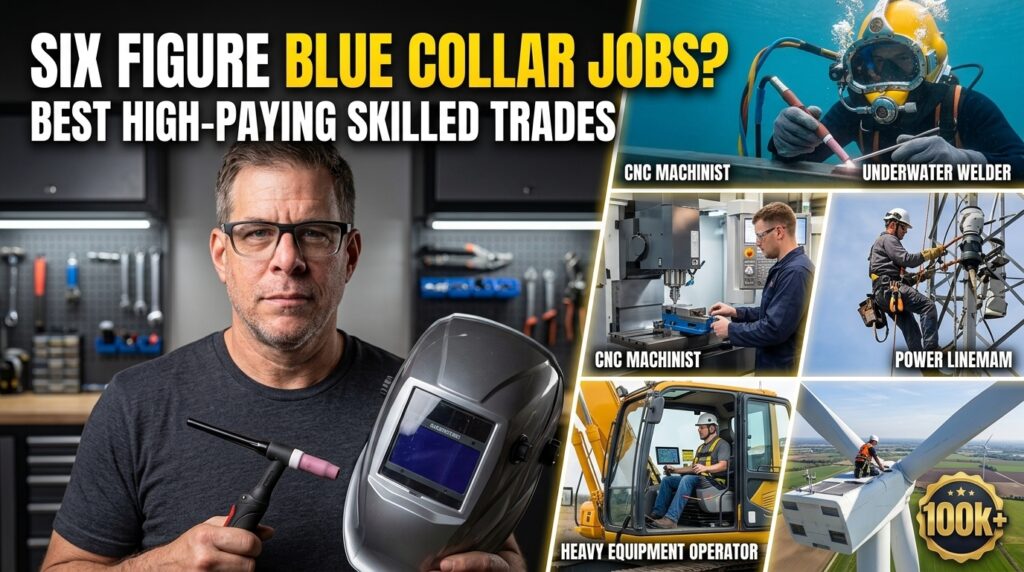
Specialized Welders – Structural starts ordinary; pipeline, underwater, and aerospace welding open six-figure territory for those willing to travel and certify.
How Regular Guys Actually Reach Six Figures
The median is not the ceiling. Almost every trade on this list follows the same practical ladder:
- Enter through a paid apprenticeship or short technical program.
- Finish the hours and get licensed or certified.
- Specialize commercial, industrial, controls, travel, or storm work.
- Stack overtime and build a reputation.
- Move into supervision, estimating, or ownership.
Ownership is still the biggest multiplier. A one-truck HVAC or plumbing operation doing a few hundred thousand in revenue is common. Scale it to a small crew and the owner’s take-home often sits comfortably in six figures with equity building on the side.
Union apprenticeships remain one of the cleanest Six Figures Zero Debt paths available. You earn while you learn, benefits are strong, and the pension is real. Non-union shops can move faster in some markets if you stay aggressive about skills and customers.

What Actually Separates the Men Who Make It
Location still matters. High-cost coastal states and energy regions pay higher sticker rates. Lower-cost areas stretch the same check further.
Specialization beats general work every single time. The man who can troubleshoot building automation or weld to pipeline standards is not competing with the average journeyman.
Reputation compounds faster than almost anything else. The trades still run on who picks up the phone when something is broken at night. The guys who answer and fix it right end up with the best long-term opportunities.
The Real Picture for 2026
The shortage of skilled hands is not slowing down. Retirements and infrastructure spending keep the pressure on. You can still walk into most of these highest paying skilled trades without a four-year degree and without debt. The men who treat the first few years like an investment learning every system, stacking certifications, showing up early are the ones living the six-figure blue collar life while their college peers are still making loan payments.
I’ve watched it happen for three decades. The path is still open. Pick the trade that fits your body and your tolerance for weather or travel. Get the entry requirements for your state. Apply to the apprenticeship or the short program. The rest is execution.
That’s the honest breakdown on Blue Collar Jobs That Pay Six Figures: Best High-Paying Skilled Trades Careers from someone who’s lived it. More real talk coming soon on JV CHARLES TV.
Frequently Asked Questions
Which blue collar job pays the most right now?
Elevator installers lead pure trade medians. Linemen with heavy storm work and specialized welders on travel jobs often out-earn the published numbers.
How long does it take to reach six figures?
Some specialized welders and storm-chasing linemen hit it in three to four years. Most mechanical trades take five to eight years of consistent work, specialization, and often ownership.
Do I need a college degree?
No. Almost every path on this list starts with high school, a short technical program, or a paid apprenticeship.
Is the demand still real?
Yes. BLS projections and the daily shortage of qualified hands both confirm it. Retirements and infrastructure needs keep openings strong.
Can I start in my thirties or forties?
Plenty of men do it successfully. The physical side is real, but the financial upside is still there if you treat it like a career.
References
- U.S. Bureau of Labor Statistics, Occupational Employment and Wage Statistics, May 2025
- U.S. Bureau of Labor Statistics, Occupational Outlook Handbook (latest construction and installation occupation data)
- Industry apprenticeship programs and direct field observations from working tradespeople
- More than thirty years of personal experience across multiple skilled trades