What Blue Collar Side Hustles Actually Pay: Real Rates By Job
Most guys ask me the same thing after a long week on the tools: what blue collar side hustles actually pay, and which ones are worth the extra hours. I’ve been around trades careers long enough to know the difference between the hype numbers online and the cash that hits your account after fuel, insurance, and a couple of callbacks. On JV CHARLES TV I dig into the real rates by job because guessing gets expensive.
I’m JV Charles, founder and senior editor here. After three decades in the trades and watching hundreds of guys stack extra income on top of their regular pay, I’ve seen the patterns. The ones who treat side work like a real business clean pricing, solid reviews, and no shortcuts turn weekend hours into the kind of money that builds six figures zero debt over time. The ones who undercharge or chase every shiny idea stay tired and broke.
Key Takeaways
- Licensed trades side work (electrical, plumbing, hvac) routinely pulls $75–$150 per hour when priced right.
- Flat-rate jobs often beat pure hourly rates for speed and customer peace of mind.
- Lower-barrier hustles like pressure washing, mobile detailing, and garage door repair can still clear $50–$150 effective hourly once you’re efficient.
- Recurring clients and maintenance contracts turn one-time gigs into steady cash.
- Location, specialization, and your own speed matter more than any national average.
Why Real Rates Matter More Than Averages
National averages hide the truth. A journeyman electrician working for a company might see $30–$45 on the clock. The same guy doing side panel upgrades or EV charger installs on Saturday can bill $75–$125 an hour or flat rates that work out even higher. Same tools. Different outcome.
The gap comes from overhead. When you work for yourself you carry insurance, fuel, tools, and marketing. Charge too low and you work for free after expenses. Charge smart and the math starts working in your favor. That is how a lot of guys in skilled trades move from solid paychecks toward the highest paying skilled trades lifestyle without waiting for a promotion.
Real Rates by Job – What People Are Actually Charging in 2026
Licensed Electrical Side Work
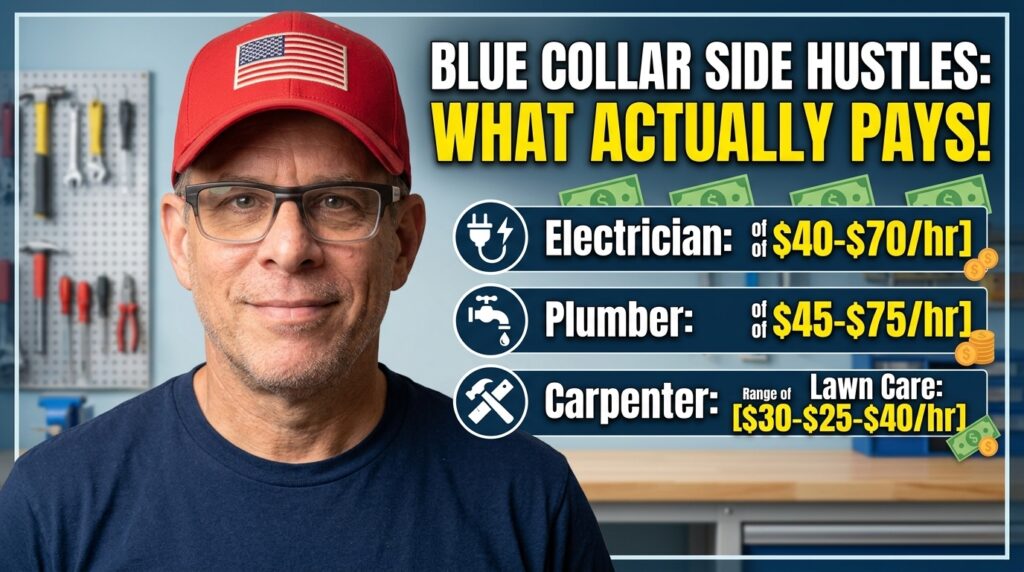
Panel upgrades, outlet additions, lighting, generator connections, and especially EV charger installs. Realistic range sits $75–$125 per hour in most markets. A single Level 2 charger job often runs $300–$800 in labor alone. Two solid jobs on a Saturday can put $1,000–$1,500 in the account before expenses. High demand from EV growth keeps the phone ringing.
Plumbing Side Jobs
Toilet and faucet swaps, water heaters, drain cleaning, and leak repairs. Licensed plumbers commonly charge $75–$150 per hour. Flat rates keep things simple: toilet install $150–$300, many drain jobs in the same neighborhood. Two or three jobs on a weekend easily clear $600–$900. Emergency or after-hours work pushes the numbers higher.
HVAC Side Work
Seasonal tune-ups, filter changes, simple repairs, and refrigerant checks. Rates land $85–$125 per hour for many independent techs. Tune-up packages often price $80–$150 flat. Spring and fall peak seasons fill the calendar fast. Recurring annual maintenance clients become the real money makers over time.
Handyman and General Repair
Furniture assembly, drywall patches, door adjustments, basic carpentry. Independent rates typically $50–$100 per hour, climbing to $100–$150 for specialized or high-cost areas. Annual take-home for consistent operators often lands $40,000–$80,000 part-time to full-time, with top performers clearing more.
Pressure Washing
Driveways, decks, house exteriors, sidewalks. Effective hourly rates after efficiency settle around $50–$150. Typical residential jobs: driveway $125–$250, house wash $250–$500+, full property packages higher. A clean Saturday of two or three jobs can bring $600–$1,500 gross. Margins stay strong once equipment is paid for.
Mobile Detailing
Basic wash to full interior/exterior details and ceramic coatings. Per-vehicle pricing runs $50–$200+ for standard work, $150–$300 for full details. Premium services climb higher. Solo operators working weekends and evenings commonly clear $2,000–$4,000+ a month once they have regular clients. Monthly maintenance plans create predictable income.
Garage Door Repair
Spring replacements, opener fixes, sensor work. Average tickets $150–$350. Efficient techs run multiple calls a day. Solo operators often land $60,000–$100,000+ annual when busy; adding techs scales it further. Emergency calls and weekend work carry premiums.
Other Solid Options
Junk removal and clean-outs: $150–$400 per load depending on size. Gutter cleaning: $150–$300 per house. Small engine or mobile mechanic work: $50–$120 per hour on common jobs. Parking lot striping or similar specialized services can hit $300–$600 for short jobs when you have the gear.
These numbers come from current market reports, operator reports, and the kind of conversations that happen on job sites and in truck cabs. Your local market will shift them up or down. High-cost coastal cities sit higher. Rural or lower-cost areas sit lower. Specialization and speed move the needle more than almost anything else.

How to Turn Side Hustles into Real Progress
Start with what you already know. If you work hvac or plumbing during the week, lean into those skills first. The learning curve is shorter and the trust is higher. Price for profit, not just to stay busy. Track every expense so you know your true hourly. Ask for reviews and referrals after every clean job. One good neighborhood can feed you for months.
Many guys use the extra cash to knock down debt, buy better tools, or fund the first steps of their own full operation. That is the quiet path a lot of blue collar workers take toward ownership and higher long-term earnings in the high paying skilled trades.
FAQs
Do I need a license for every side hustle?
Not for pressure washing, detailing, or most handyman work. Electrical, plumbing, and hvac work usually require proper licensing in your state. Check local rules before you start.
How much can I realistically make working weekends only?
Consistent operators often clear $500–$2,000+ per weekend depending on the hustle and volume. Two strong jobs in electrical or plumbing can hit the higher end. Pressure washing or detailing with a full day can do the same.
What about insurance and liability?
Get general liability coverage. Your personal auto policy usually does not cover business use. One claim can wipe out months of side income.
Which side hustle has the lowest startup cost?
Gutter cleaning, basic handyman work, or mobile detailing can start under a few hundred dollars if you already own basic tools and a vehicle. Garage door and pressure washing need more specialized gear.
Can side hustles lead to full-time self-employment?
Yes. Plenty of guys start weekends, build a client list, and eventually leave the day job once revenue is consistent. The ones who succeed treat the side work with the same standards as their main job.
Final Word from the Field
The real rates are not secrets. They are just rarely talked about honestly. Charge what the work is worth, deliver clean results, and the money follows. That approach has built more lasting wealth in the skilled trades than any get-rich-quick scheme ever will.
I’m JV Charles. If you want more straight numbers and practical steps for trades careers, you know where to find me on JV CHARLES TV.
References
- Current market rate reports and operator data from 2026 industry sources on home services pricing
- Bureau of Labor Statistics wage data used as baseline for loaded contractor rates
- Aggregated reports from pressure washing, detailing, garage door, and licensed trades operators
- Direct observations and conversations from decades in the trades and ongoing field discussions