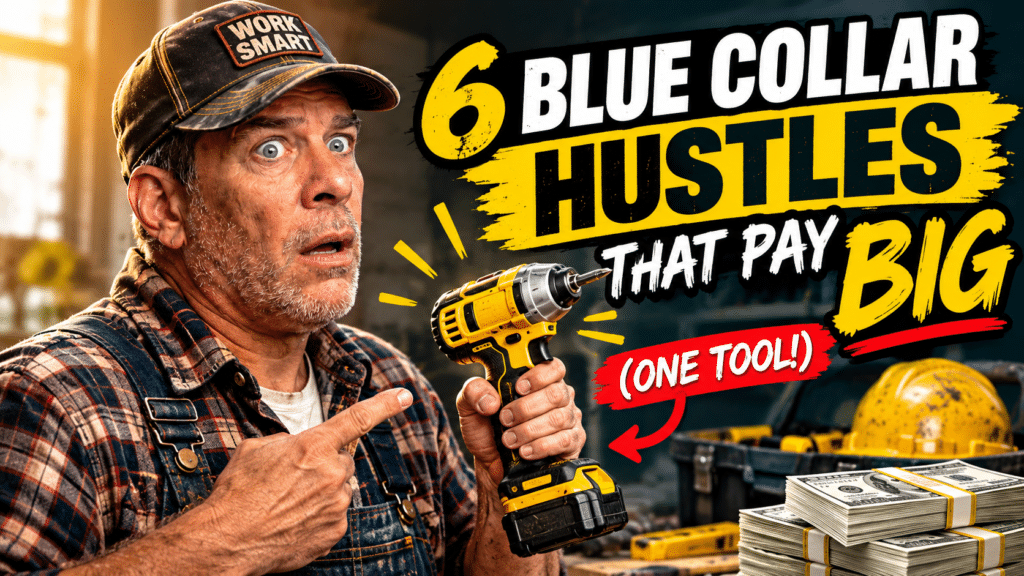
6 Blue Collar Hustles That Pay BIG (One Tool!)
Most guys think you need a full shop or a trailer full of gear to make real side money. That thinking keeps a lot of good hands stuck. The truth is simpler. 6 blue collar hustles that pay BIG (one tool!) start with something a lot of us already own or can pick up for about two hundred bucks an impact wrench.
I’m JV Charles, founder and senior editor of JV CHARLES TV. After more than thirty years in the trades union carpentry, project management, factory inspection I’ve made money with that one tool in every way you can imagine. It turns jobs that take a regular homeowner an entire afternoon into ten or twenty minutes of work. That speed difference is what people pay for.
Key Takeaways
- One cordless impact wrench unlocks six practical blue collar side hustles with almost no overhead.
- Realistic weekend earnings start in the hundreds and scale into serious extra income when you treat it like a business.
- These fit cleanly around full-time trades careers in HVAC, plumbing, electrical, or general construction.
- Current BLS May 2025 numbers put plumbers at a $63,800 median, electricians at $63,190, and HVAC techs at $61,010 side work is how many guys push into the highest paying skilled trades range and hit six figures zero debt.
- Start with the simplest one, collect cash same day, and let the work grow naturally.
Why One Tool Changes Everything
An impact wrench is not just another tool in the drawer. Most homeowners and even a lot of small business owners do not own one. When a lug nut is seized, a mower blade bolt is rusted solid, or a trailer axle needs service, they are stuck. You roll up, hit it with the impact, and the problem disappears in minutes. That convenience is the product.
No shop rent. No big inventory. No waiting on invoices if you structure it right. Just the tool, a truck most of us already drive, and the skills that come from working in the skilled trades.
The Six Hustles Built Around One Impact Wrench
1. Mobile Tire and Seasonal Wheel Swaps
This is the job the impact was made for. Two groups of people need it constantly: folks with a second set of winter or summer tires, and people who ordered tires online and cannot get them mounted without waiting a week and paying shop prices.
You pull into the driveway, jack the car, spin the lugs off and back on. Four wheels done in about twenty to thirty minutes. Charge $60 to $80. The real volume comes from seasonal swaps winter on in the fall, winter off in the spring. Get thirty regular customers and you have built-in work twice a year without chasing anyone. They text you when the first cold morning hits.
Startup is simple: the impact, a decent floor jack, jack stands, and a torque wrench for the final tightening. That last tool matters. The impact gets them loose and snug; the torque wrench finishes them to spec so you never leave a customer with a warped rotor or stretched stud.
2. Mower Blade Swap and Sharpening
Every lawn in the neighborhood has a dull or damaged blade. The average homeowner will strip their knuckles for an hour trying to break that bolt free and then give up. You hit it with the impact and it comes off in seconds.
Pull the old blade, put a sharp one on, or sharpen theirs on a basic grinder. Ten minutes start to finish. Charge $40 to $60 per mower. While you are under there, scrape the deck clean and hit the spindle bolts with some grease. Now it is a full service and you are at $80. Run a spring route and the work stacks fast. Talk to the small lawn-care guys already out there they have trailers full of mowers and no time to sharpen them. Service their whole fleet and you pick up recurring customers instead of one-offs.
Extra gear needed: sockets, a cheap bench grinder, and a few universal blades. Under $150 beyond the impact itself.
3. Heavy Assembly and Bolt-Together Builds
Furniture, playsets, basketball hoops, shed kits, gym equipment anything that comes in a box with a pile of bolts. The average person struggles with a hand ratchet for hours. You show up with the impact and the whole thing goes together in a fraction of the time.
Standard assembly work commonly runs $60 to $100 an hour or a flat rate based on the project size. A big playset or shed kit can clear a few hundred dollars in a morning. Post in local groups that you do same-day assembly with professional tools and the calls come. This one pairs especially well with the tire and mower work because the same neighborhoods need all three.
4. Trailer, Boat, and RV Wheel Service
Shops often will not touch boat trailers or older utility trailers. You go to them driveway, storage lot, or marina. Repack bearings and swap wheels on a two-axle trailer commonly brings $200 to $350. Single axle sits around $150.
The season sells itself. Every spring before the lake opens, every boat owner needs this done at least once. Same for RVs and utility trailers before camping season. Keep a few common seals and grease on hand and you are ready. The impact makes the heavy lug work fast and the job stays profitable.
5. On-Site Equipment and Fleet Service
This is the one people pay serious money for because almost nobody else will show up. Small contractors, landscapers, and light commercial fleets need wheels, blades, and bolted components serviced on their equipment without hauling everything to a shop.
You go to their yard or job site. The rates climb because of the convenience and the fact that downtime costs them money. Number five in the list is the one that often pays the highest single-job tickets for exactly that reason. Once a couple of these accounts trust you, the work becomes steady and higher margin.
6. Turning It Into a Real Mobile Service Business
This is where the first five ladder up. One truck, one impact, a growing list of regular customers, and eventually a second set of hands or a second truck. The overhead stays low no shop lease, no big fixed bills. Two trucks running steady can turn into a six-figure operation built on the same tool that cost a couple hundred bucks to start.
The key rule is simple: do one thing right, get paid same day or on the spot when possible, and let the referrals do the marketing. The tire customer asks if you do boat trailers. The mower guy asks if you will assemble his new shed. That is how one tool becomes a real business.

How This Fits With Regular Trades Work
These side plays sit comfortably next to a full-time job in HVAC, plumbing, electrical, or any of the core trades careers. A Saturday morning of tire swaps or a couple of mower blade jobs does not wipe you out for Monday. Plenty of guys already watching plumbers pay and the rest of the high paying skilled trades numbers climb are stacking an extra thousand or more a month this way without quitting their day job.
The Bureau of Labor Statistics May 2025 data still shows the foundation is solid. Plumbers, pipefitters, and steamfitters sit at a $63,800 median. Electricians are right there at $63,190. HVAC mechanics and installers hold $61,010. The top ten percent in the licensed trades clear well over $100,000. Side work with low overhead is one of the cleanest ways to close that gap and move toward six figures zero debt.
Getting Started Without Overcomplicating It
Buy a solid cordless impact if you do not already have one around $150 to $250 for a good one. Add a floor jack, torque wrench, and a few sockets. That is enough to start the first two hustles this weekend. Post a simple offer in the neighborhood Facebook groups and Nextdoor. One clear before-and-after photo of a set of wheels swapped or a mower blade changed does more than most ads.
Collect payment before you leave when you can. Cash, Venmo, or Zelle keeps it clean. Keep the work professional and safe torque the lugs properly, use jack stands, and never cut corners on the finish. Reputation is the only marketing that actually lasts.
FAQs
What is the single best tool for blue collar side hustles?
A quality cordless impact wrench. It turns slow, frustrating jobs into quick, high-value work across tires, mowers, trailers, and assembly.
How much can you make with these one-tool hustles?
A solid Saturday focused on tire swaps and mower blades can clear a few hundred dollars. Consistent guys who add trailer work and fleet calls push well past a thousand extra a month once the regulars build up.
Do I need special licenses or insurance?
Basic mobile service work under common residential limits usually does not require a full contractor license, but liability insurance is smart and often required if you start working for businesses or fleets. Check your local rules.
How does this compare to regular skilled trades pay?
It adds to it. The current national medians for the core trades sit in the low-to-mid $60k range. Side work with almost no overhead is how many experienced hands move into the highest paying skilled trades territory without taking on debt.
Where do I find the first customers?
Local Facebook groups, Nextdoor, neighborhood apps, and simply telling the people already around you. Seasonal timing spring for mowers and boat trailers, fall for winter tires makes the work show up on its own.
References
- U.S. Bureau of Labor Statistics, Occupational Employment and Wage Statistics, May 2025 release (plumbers, pipefitters, and steamfitters median $63,800; electricians $63,190; HVAC mechanics and installers $61,010).
- BLS Employment Projections 2024–2034.
- JV Charles TV video “6 Blue Collar Hustles That Pay BIG (One Tool!)” and related channel content drawn from 30-plus years of direct trades experience.
One tool. Six ways to get paid. The work is already sitting in driveways and yards all around you. The only real question is whether you are going to keep walking past it or start collecting.