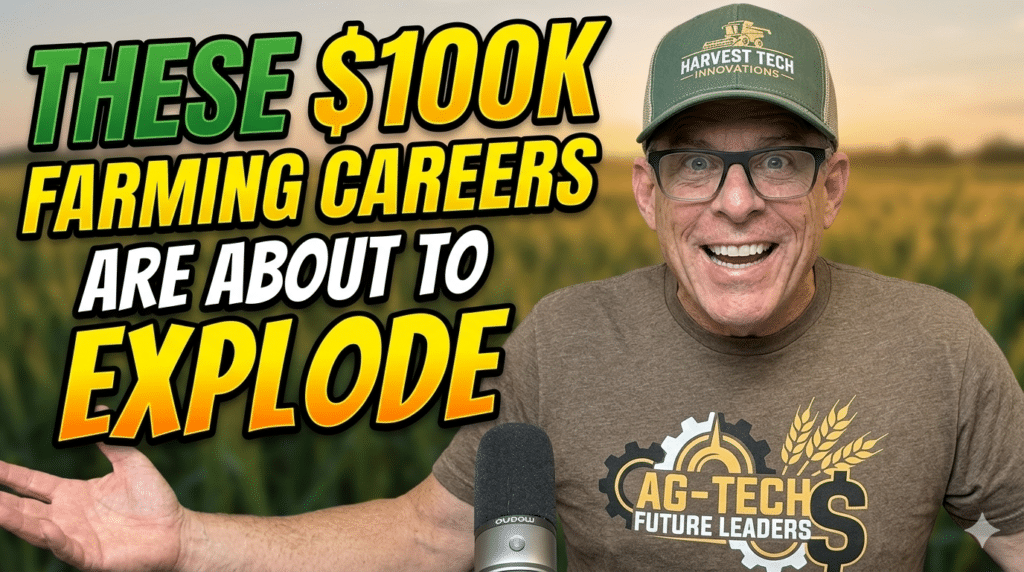
These $100K Farming Careers Are About to Explode
These $100K Farming Careers Are About to Explode and if you’ve been paying attention to where real opportunity lives in the trades right now, this one hits different. We’re not talking about another app or some desk job that’ll get automated in five years. We’re talking about blue collar work that keeps the country fed, combines old-school mechanical know-how with brand-new technology, and is already putting serious money in the pockets of guys who never touched a college loan.
Over at Trades Careers and JV CHARLES TV, I’ve spent years talking to the men and women actually doing the work the ones turning wrenches on million-dollar machines, dialing in climate systems inside massive greenhouses, and keeping water flowing across thousands of acres. What I’m hearing lately is that the demand is outpacing the supply, fast. And the pay reflects it.
Key Takeaways
- High paying skilled trades tied directly to modern agriculture especially equipment service, specialized HVAC, and precision irrigation are entering a major growth phase driven by technology adoption and controlled environment farming.
- Experienced techs in these niches are regularly clearing $80,000 to $110,000+ with overtime, bonuses, and performance pay, often with Six Figures Zero Debt thanks to paid apprenticeships and manufacturer training.
- The highest paying skilled trades in this space reward specialization: precision diagnostics on ag equipment, commercial greenhouse climate control, and large-scale smart irrigation systems.
- You can start earning while you learn through apprenticeships and dealer training programs no four-year degree required, and in many cases no debt at all.
- Labor shortages + exploding demand for year-round, tech-enabled food production means these roles are only getting more valuable through the rest of this decade.
Why Modern Farming Is Suddenly Hungry for Skilled Tradespeople
Walk onto a big commercial farm or a vertical facility today and you won’t see the same picture your grandfather knew. The equipment talks to satellites. The greenhouses run on sensors and algorithms. A single irrigation zone can be adjusted from a phone while the tech is still driving to the next job.
That complexity creates a skills gap. Farmers and facility owners aren’t just looking for strong backs anymore. They need people who can read a diagnostic code on a combine, troubleshoot a Priva climate computer, or commission a variable-rate fertigation system without calling in an expensive outside contractor every time something hiccups.
Agricultural equipment technicians are the backbone of this shift. These are the folks keeping John Deere, Case IH, and other high-horsepower machines running during the narrow windows of planting and harvest. When a $600,000 combine goes down in the middle of a 12-hour harvest day, every hour costs real money. The techs who can get it back online fast become indispensable and they get paid accordingly.
Then there’s the controlled environment agriculture (CEA) boom. Vertical farms, high-tech greenhouses, and indoor growing operations are expanding rapidly because they deliver consistent, pesticide-light produce close to cities and work regardless of weather. These facilities live and die by precise climate control. That’s where specialized HVAC techs come in not the residential guys swapping out home furnaces, but technicians who understand dehumidification, CO2 enrichment, VPD management, and energy-efficient systems built for 24/7 growing environments. The market for ventilation and air conditioning tailored to indoor agriculture is projected to grow at nearly 19% annually through 2030. That kind of growth creates jobs.
Smart irrigation and large-scale plumbing systems are another sleeper hit. Water is expensive and regulated in a lot of ag regions. The guys who can design, install, and maintain automated drip and fertigation systems across hundreds or thousands of acres are in short supply. Plumbers pay in this niche especially when you add in the controls and sensor integration can climb well into six figures once you’re the go-to person for commercial growers.
The Highest Paying Skilled Trades in Farming Right Now
Here’s where the numbers get interesting in 2026:
Agricultural Equipment Service Technicians BLS median sits around $52,000 nationally, but that’s dragged down by entry-level and smaller operations. At busy dealerships and large farms, especially with precision ag certifications, experienced techs are seeing total compensation in the $70,000–$95,000 range, with top performers and field service roles pushing past $100k when you factor in overtime during peak seasons and performance bonuses. John Deere and similar dealer networks have structured training paths that turn apprentices into highly paid specialists.
Specialized HVAC & Climate Control for CEA/Greenhouses Commercial HVAC techs already earn strong money in data centers and hospitals. Add greenhouse or vertical farm expertise and the ceiling rises. Techs who can service complex systems in these facilities often with on-call demands during critical growth phases are commanding $80k–$120k+ in high-activity regions. The skill overlap with traditional commercial refrigeration and controls makes the transition realistic for experienced techs.
Ag Irrigation Specialists & Pipefitters General irrigation work pays decently. The commercial ag version, especially when it includes automation, fertigation, and water treatment, pays better. Experienced specialists handling large-scale systems routinely clear $70k–$100k+, with business owners or lead techs on big projects doing even better.
These aren’t theoretical numbers. They’re what guys in the field are actually taking home when they combine technical skill, reliability, and the willingness to go where the work is.
How to Actually Get Into These Roles With Six Figures Zero Debt
This is the part most people miss. You don’t need a $60,000 degree to access these careers. The smart path looks like this:
Many manufacturers and dealers run paid apprenticeship or training programs. You earn while you learn sometimes starting at $18–$25/hour with benefits and they often cover or heavily subsidize the schooling. John Deere’s tech training, for example, is respected industry-wide and leads directly to jobs.
Community colleges and trade schools with ag or diesel programs are another route, and many have strong industry partnerships. Certifications matter more than diplomas here: EPA 608 for refrigerant work, manufacturer-specific diagnostics credentials, irrigation association certifications, and precision ag short courses.
The real advantage? You can be earning real money inside 12–24 months instead of graduating with debt and hoping for an entry-level salary. Plenty of techs I’ve talked to cleared six figures by year five or six without ever taking out a student loan.
What the Work Actually Feels Like
It’s not easy. You’ll work in all kinds of weather. Harvest season means long days and being on call. Greenhouse environments can be hot and humid. But a lot of guys who came from general construction or residential service say the pay, the variety, and the fact that you’re solving real problems every day make it worth it. One tech told me recently that fixing a $400,000 sprayer at 2 a.m. during planting season feels a hell of a lot better than fixing another leaky faucet in a subdivision.
And because these operations are capital-intensive, the people who keep them running get treated like the professionals they are.

The Bottom Line
These $100K Farming Careers tied to skilled trades aren’t a fad. They’re the direct result of farming getting more technical while the traditional labor pool stays tight. The operations that adopt precision equipment, controlled environments, and smart water systems need people who can actually make that technology work in the dirt or in the greenhouse.
If you’re looking for work that can’t be shipped overseas or replaced by an algorithm anytime soon, and you want a clear shot at Six Figures Zero Debt, this corner of the Trades Careers world deserves a serious look.
The guys already in it aren’t waiting around. Neither should you.
FAQs
Can you really hit $100k in these farming-related skilled trades without a college degree?
Yes. It usually takes 4–7 years of focused experience plus the right certifications and willingness to work peak seasons or travel for field service, but plenty of techs are doing it right now through dealer programs and specialization.
Which trade has the best shot at six figures fastest in agriculture?
Agricultural equipment service techs at busy dealerships or large operations often have the clearest path because the machines are expensive and downtime is costly. Specialized HVAC for CEA is close behind as that sector scales.
How physical is the work compared to regular construction or residential trades?
It varies. Equipment techs do a lot of diagnostic and computer work now, but you’ll still climb on machinery and work in the elements. Greenhouse climate techs spend more time in controlled environments. Overall it’s demanding but often more varied and better compensated than pure residential service.
Are these jobs seasonal?
Some aspects are harvest and planting create spikes but modern operations run year-round, especially CEA facilities. Many techs stay busy with maintenance, upgrades, and service contracts during slower months.
What’s the single best first step if I’m interested?
Reach out to local ag equipment dealers (John Deere, CNH, etc.) and ask about their technician training or apprenticeship programs. Many are actively recruiting because they can’t find enough qualified people. Also check community college programs with strong industry ties.
References
- U.S. Bureau of Labor Statistics, Occupational Employment and Wage Statistics (OEWS), May 2025 / 2026 updates for Farm Equipment Mechanics, HVAC Mechanics, Plumbers/Pipefitters, and related occupations.
- Global Market Insights, Controlled Environment Agriculture (CEA) Market Report, 2026 projections.
- Research and Markets, Ventilation and Air Conditioning for Indoor Agriculture Global Strategic Business Report, 2026.
- Industry salary and compensation data aggregated from Glassdoor, Indeed, and dealer network reports for 2025–2026.
- BLS employment projections 2024–2034 showing strong growth in precision agriculture support roles and equipment maintenance.