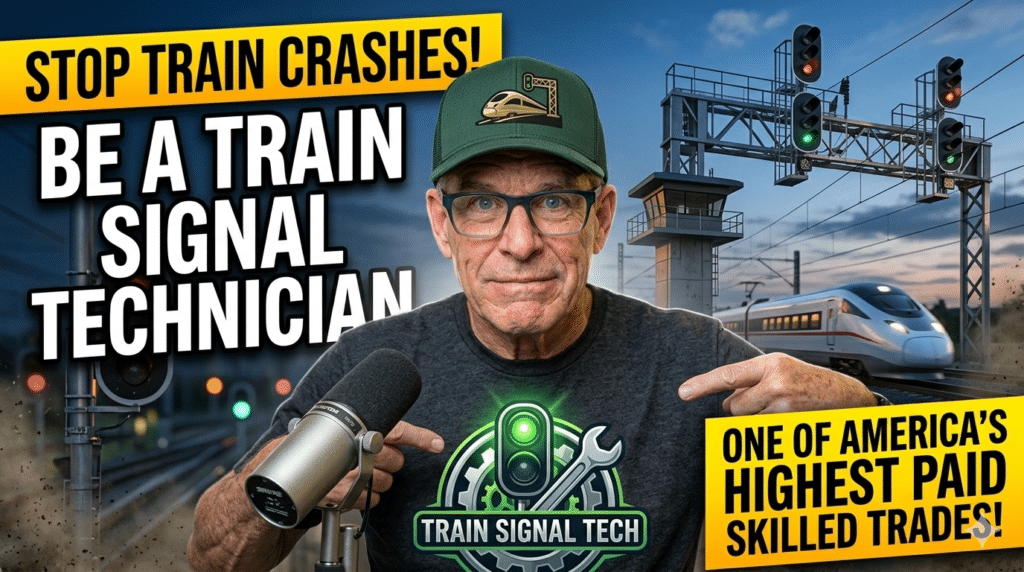
STOP TRAIN CRASHES! Be a Train Signal Technician – It’s One of America’s Highest Paid Skilled Trades
By JV Charles, Founder & Senior Editor, JV Charles TV
If you’ve ever sat at a railroad crossing watching the lights flash and the gates drop, you’ve seen the work of a train signal technician in action. These are the folks who make sure that doesn’t fail when a 10,000-ton freight or a packed commuter train is bearing down. One missed signal, one faulty switch, one crossing gate that doesn’t come down in time and you’re looking at a tragedy that makes headlines for all the wrong reasons.
That’s why I keep coming back to this trade when I talk about real skilled trades that actually deliver. It’s not flashy like some TikTok trades, but it’s one of those highest paying skilled trades that lets you pull in serious money, build a life, and go to bed knowing your work literally helps stop train crashes. And unlike a lot of paths, you can do it without drowning in student debt.
Here’s the straight talk on why this blue collar career is worth a hard look right now.
Key Takeaways
- Train signal technicians (also called railroad signal maintainers) keep the entire rail network’s safety systems running signals, switches, grade crossings, and Positive Train Control (PTC) technology.
- Latest BLS data puts median pay around $83,000–$85,000+ annually, with overtime, differentials, and seniority regularly pushing total compensation into solid six figures zero debt territory.
- You don’t need a college degree. Most paths start with a high school diploma or GED, followed by paid on-the-job training or apprenticeships through railroads and the Brotherhood of Railroad Signalmen (BRS).
- Demand stays strong because of ongoing PTC maintenance, infrastructure upgrades, an aging workforce, and strict federal safety rules.
- The total package pay + Railroad Retirement benefits + union protections often beats what many office jobs deliver after four years of debt.
What a Train Signal Technician Actually Does
This isn’t just “fixing lights.” These techs install, inspect, test, maintain, and repair the entire ecosystem that controls train movement and protects the public at crossings.
Think trackside signal systems, electronic gate mechanisms at highway-rail crossings, switch machines that route trains, communication lines, defect detectors, and the sophisticated Positive Train Control networks that can automatically stop a train if the engineer misses a signal or exceeds speed limits.
A typical day might involve driving a company truck (sometimes long distances) to troubleshoot a crossing that’s acting up after a storm, climbing signal masts or working in equipment houses, running diagnostics on electronic systems, or responding to emergencies when something fails. Weather doesn’t care about your schedule you’ll work in heat, cold, rain, and snow. Many roles include on-call rotations because when a signal goes down, trains don’t move until it’s fixed.
It’s technical, hands-on, problem-solving work that blends electrical, mechanical, and increasingly digital skills. And yes, it carries real responsibility. When you do the job right, nobody notices. When something slips, it can make national news.
The Money Real Numbers, Not Hype
According to the most recent Bureau of Labor Statistics data for Signal and Track Switch Repairers, the median annual wage sits right around $82,710 to $83,600. The 75th percentile clears about $91,000, and the top end pushes past $95,000 on base wages alone.
That’s just the starting point for a lot of guys. Railroads run on overtime callouts, major projects, weather events, and territory coverage all add up. Many experienced railroad signal maintainers at Class I carriers (Union Pacific, BNSF, CSX, Norfolk Southern, etc.) and commuter systems regularly see total compensation well into the low-to-mid six figures when you factor in overtime, night differentials, and per diem.
Add the benefits layer: strong union contracts through the Brotherhood of Railroad Signalmen, health coverage, and especially the Railroad Retirement system (which layers on top of Social Security and often delivers better long-term payouts than standard pensions). Recent contract news shows ongoing wage increases, signing bonuses, and improvements in working conditions on various properties.
Compare that to the college route most people still get pushed toward. Four years of tuition, books, and lost wages versus getting paid to learn a trade that can have you earning good money inside 12–24 months. That’s the six figures zero debt math that actually works.
Why Demand Is Solid Right Now
Positive Train Control is fully mandated and operational across the required network, but it’s not “set it and forget it.” These systems need constant maintenance, testing, upgrades, and troubleshooting. Add in broader infrastructure investments, growing freight and passenger volumes, and a wave of retirements in the skilled trades, and you’ve got steady work.
Federal safety regulations keep raising the bar. Railroads can’t afford downtime or incidents. That creates real job security for people who can master these systems.
It’s not recession-proof in the dramatic sense, but rail moves an enormous share of American freight. When the economy slows, they still need the network running safely. When it heats up, volume increases.
How to Actually Get Started (No College Debt Required)
Most people come in with a high school diploma or GED and some mechanical or electrical aptitude. You’ll need a clean driving record (you’ll be driving a lot), pass a drug screen and physical, and be willing to work irregular hours.
The typical path:
- Apply directly on railroad career sites (Amtrak, Class I’s, regionals, transit agencies) or check with the Brotherhood of Railroad Signalmen.
- Start as a helper, assistant signalman, or in a formal apprenticeship program.
- Get paid while you learn on-the-job training combined with classroom or vendor-specific courses on the equipment.
- Work toward FRA signal employee certification and any internal qualifications.
Some community colleges and specialized schools (like Signal Training Solutions) offer targeted programs that railroads recognize. But the majority of learning happens on the property because the equipment varies by railroad and territory.
It’s competitive in desirable locations, but turnover and retirements keep openings coming. Being willing to start in a less glamorous territory or work the on-call schedule helps you get your foot in the door faster.
The Honest Trade-Offs
This job isn’t for everyone. You’ll work outdoors in all conditions. You’ll get called out at 2 a.m. sometimes. Some territories involve significant travel or being away from home. The work can be physically demanding climbing, lifting, working in confined equipment houses.
Safety is paramount, but you’re still around live tracks and high-voltage equipment. Rail culture is old-school in places strong unions, but also expectations around reliability and showing up.
That said, a lot of guys who stick with it love the independence, the variety, the tangible results of their work, and the compensation package. It beats staring at a screen all day for many people.
How It Compares to HVAC, Plumbing, and Other High-Paying Blue Collar Paths
HVAC techs and plumbers can both do very well especially once you’re licensed, running service calls, or owning a truck. Median numbers for those trades often land in the $55k–$65k range nationally, with top performers clearing more through overtime, specialties (refrigeration, commercial, etc.), or business ownership.
Elevator mechanics frequently top the “highest paying skilled trades” lists because of the pay scale and urban concentration. Power linemen and certain industrial roles also compete hard on total compensation.

The train signal technician role stands out for a few reasons: the direct life-safety impact, the sophisticated mix of old-school railroading and modern electronics/PTC, strong union + Railroad Retirement benefits, and the fact that you’re part of keeping a critical national infrastructure running. For someone who wants technical work with real stakes and doesn’t mind the railroad lifestyle, it’s hard to beat.
If you prefer more predictable daytime hours and residential service work, HVAC or plumbing might fit better. If you want maximum earning potential in dense cities and don’t mind heights, elevators are worth exploring. There’s room for good people in all of them.
Who This Actually Fits
You’ll probably like this work if you’re mechanically inclined, good at troubleshooting, reliable under pressure, and okay with irregular schedules and being outdoors. If you take pride in doing work that matters work that prevents real disasters it hits different than just another job.
If you need a strict 9-to-5, hate on-call, or can’t handle working alone in remote areas sometimes, it might drive you crazy.
Bottom Line
The old advice to “go to college or you’ll end up in a dead-end job” is tired. Plenty of skilled trades especially ones like train signal technician are paying better than a lot of degrees while giving you a clear path to six figures zero debt and work that actually keeps people safe.
If stopping train crashes before they happen, mastering complex systems, and building real wealth without a diploma mill bill sounds interesting, start digging into railroad career pages and the Brotherhood of Railroad Signalmen. Talk to guys already doing the work. See if the lifestyle clicks.
The rails aren’t going anywhere. Neither is the need for sharp people who can keep the signals working.
Stay safe out there.
JV Charles Founder & Senior Editor, JV Charles TV
Frequently Asked Questions
How much can a train signal technician really make with overtime?
Base median pay sits around $83k according to recent BLS figures, but overtime, callouts, differentials, and seniority push many experienced maintainers well into six figures. Total compensation including benefits is often what makes the biggest difference.
Do I need a college degree to become one?
No. A high school diploma or GED plus mechanical/electrical aptitude is the typical starting point. Paid training and apprenticeships are the main path.
How long does training take?
It varies, but many start earning while learning in helper or apprentice roles. Full qualification can take 1–4 years depending on the program and how quickly you progress.
Is the work dangerous?
There are inherent risks working around tracks and electrical systems, but railroads emphasize safety heavily. Proper training and procedures reduce risks significantly compared to the public perception.
What’s the job outlook like?
Steady. PTC maintenance, infrastructure work, retirements, and safety regulations keep demand consistent. It’s not exploding like some tech fields, but it’s reliable work in a critical industry.
How do benefits compare to other trades?
Very competitive. Union representation, strong health packages, and especially Railroad Retirement (which builds on top of Social Security) give this trade an edge for long-term security.
Can I start in one part of the country and move later?
Yes. Skills transfer reasonably well between railroads, though each has its own equipment and culture. Seniority often resets when you change carriers, so many people weigh that carefully.
References & Further Reading
- Bureau of Labor Statistics, Occupational Employment and Wage Statistics – Signal and Track Switch Repairers (latest available data)
- Brotherhood of Railroad Signalmen (brs.org) – union information, contracts, and resources
- Federal Railroad Administration – Positive Train Control resources and safety information
- O*NET OnLine – detailed occupational data for Signal and Track Switch Repairers
- Recent railroad career postings and union contract summaries (wage progression and benefits details vary by carrier and location)