Almost Skipped This Quick Side Hustle Then 2 Neighbors Asked for Help!
I almost skipped this quick side hustle. Then 2 neighbors asked for help and I left that little town with $450 cash in under two hours. I’m JV Charles, founder and senior editor at JV CHARLES TV, and after more than 30 years in the skilled trades union carpenter, project manager, senior auto inspector I’ve watched too many solid hands talk themselves out of the exact kind of easy money that stacks into real options.
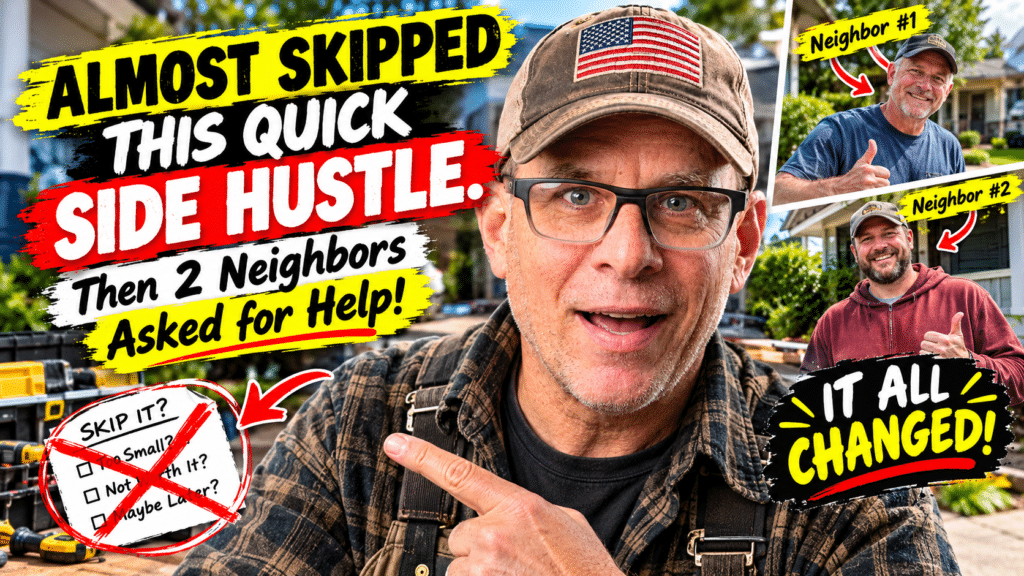
It was a 30-minute drive for a $120 job. A couple of limbs hanging over a roof. I sat in the truck doing the gas math and almost turned around. Then I went anyway. Thirty minutes with the pole saw and a neighbor pulls over. “Hey, you do this kind of work? Come look at mine.” Ten minutes later another one walks across the road. Same thing. One job I nearly skipped turned into three.
That’s the pattern I keep seeing in trades careers and blue collar side hustles. The money isn’t always in the big commercial bid. Sometimes it’s in the small neighborhood job you almost talk yourself out of because the drive feels long or the ticket feels light.
Key Takeaways
- One visible job in a neighborhood often turns into two or three more the same day through simple word of mouth.
- Tree limb and light tree work with a pole saw is one of the fastest “show up and get paid” plays available to guys already comfortable with tools.
- Startup can stay low if you already own a pole saw, chainsaw, or basic climbing gear or can borrow one for the first few jobs.
- These fits cleanly around full-time work in HVAC, electrical, or any other high paying skilled trades.
- Saying yes to the small local jobs is how a lot of tradesmen start building toward six figures zero debt without quitting the day job first.
Why Most Guys Almost Skip the Exact Work That Pays
We all do the math the wrong way sometimes. Thirty minutes of drive time for $120 feels light when you’re used to commercial rates or overtime. Gas, time, the “is it even worth it” voice. I’ve done that calculation more times than I want to admit.
But in a small town or a tight neighborhood, one job is a billboard. People see the truck. They see the work. They walk over. That $120 job becomes $450 in the same afternoon because two neighbors decided they didn’t want to wait for the big tree service that charges three times as much and takes three weeks to show up.
This is pure blue collar reality. Homeowners need the limbs off the roof before the next storm. They don’t want a full tree removal quote. They want someone who can handle a pole saw safely and finish clean. Guys already working in the skilled trades already have the safety sense, the tool familiarity, and the work ethic. The gap is just deciding the small job is worth the drive.
How the Quick Side Hustle Actually Works
You don’t need a bucket truck or a full tree service license for light limb work in most areas (always check your local rules). A decent pole saw, a chainsaw for the bigger stuff that comes down, basic PPE, and a way to haul the brush. Many tradesmen already have most of that in the truck or garage.
Typical pricing in 2026 still lands in the $100–$250 range for a couple of limbs or a small cleanup, depending on height, access, and how much brush has to leave the property. Larger cleanups or multiple trees push higher. The real multiplier is the same-day neighbor effect. One visible job often books the next two before you even finish cleaning up.
I’ve watched this exact sequence play out for years. The guy who treats the small neighborhood call like it matters ends up with a string of regulars. The guy who only chases the big tickets stays busy when the commercial work is rolling and quiet when it slows.
Why This Fits Perfectly With Trades Careers
If you’re already in HVAC, watching plumbers pay climb with experience and overtime, or working any of the highest paying skilled trades, you already know how to show up, assess risk, and finish clean. Tree limb work uses the same traits. It also runs on evenings and weekends without interfering with the main job.
A lot of the men I know who eventually hit six figures zero debt didn’t do it by grinding more overtime for someone else. They stacked small, high-trust local work on top of their trade income until the side stream became reliable enough to give them options. This is one of those streams. Low equipment barrier. Fast cash. Built-in marketing every time you park the truck on a residential street.

How to Start Without Overthinking It
- Get a solid pole saw if you don’t already have one. Many guys start with a quality gas or battery model under a few hundred dollars.
- Check local rules on what you can do without a full arborist license. Light residential limb work is usually open.
- Post simple before-and-after photos in neighborhood Facebook groups and Nextdoor. Be specific: “Limb removal and roof clearance, evenings and weekends.”
- Price for the full job limbs down, brush hauled, site left clean. People pay for the finished look, not just the cutting.
- Say yes to the first few even if the drive feels long. The second and third jobs often come from the first.
The biggest mistake I see is waiting for the perfect high-dollar call. The neighborhood jobs build the reputation and the cash flow that eventually lead to the bigger ones.
The Real Lesson From That Afternoon
I almost skipped that $120 job. Two neighbors later I had $450 cash and a reminder I still need every couple of years: the small visible work compounds faster than most of us expect. In the world of blue collar side hustles and trades careers, the guys who keep saying yes to the local calls are usually the ones who end up with more options than the ones still waiting for the perfect opportunity.
If you’re already swinging tools for a living, you have a head start most people don’t. Use it. One job. One neighborhood. See what happens when people see you working.
Frequently Asked Questions
Do I need a special license for light tree limb work?
It depends on your state and the size of the work. Many areas allow basic residential limb removal and cleanup without a full arborist license, especially if you’re not climbing or using heavy equipment. Always verify local rules and carry basic liability insurance.
How much can you realistically make on a Saturday?
One good neighborhood can deliver $300–$600+ in a few hours once word spreads. Consistent operators who stay visible often clear several hundred to over a thousand extra per month working evenings and weekends.
What tools do I actually need to start?
A quality pole saw is the core tool. A chainsaw, basic PPE, ropes if needed, and a way to haul brush cover most small jobs. Many tradesmen already own most of it.
Does this work if I already have a full-time job in HVAC or plumbing?
Yes. It’s designed for after-hours and weekends. A lot of guys in the high paying skilled trades run exactly this kind of local work on the side without touching their main income.
How do the first customers usually find you?
Neighborhood Facebook groups, Nextdoor, simple Google Business listing, and especially being seen working on the first job. One clean job in a tight neighborhood often books the next two the same day.
References
- Direct experience and operator patterns observed across more than 30 years in the skilled trades and construction.
- 2026 local market rates for residential limb removal, light tree work, and brush cleanup in typical U.S. markets.
- U.S. Bureau of Labor Statistics data on related construction and maintenance occupations for context on plumbers pay, HVAC, and broader skilled trades earnings.
- Real-world results shared by tradesmen running neighborhood service work alongside full-time roles in the blue collar world.