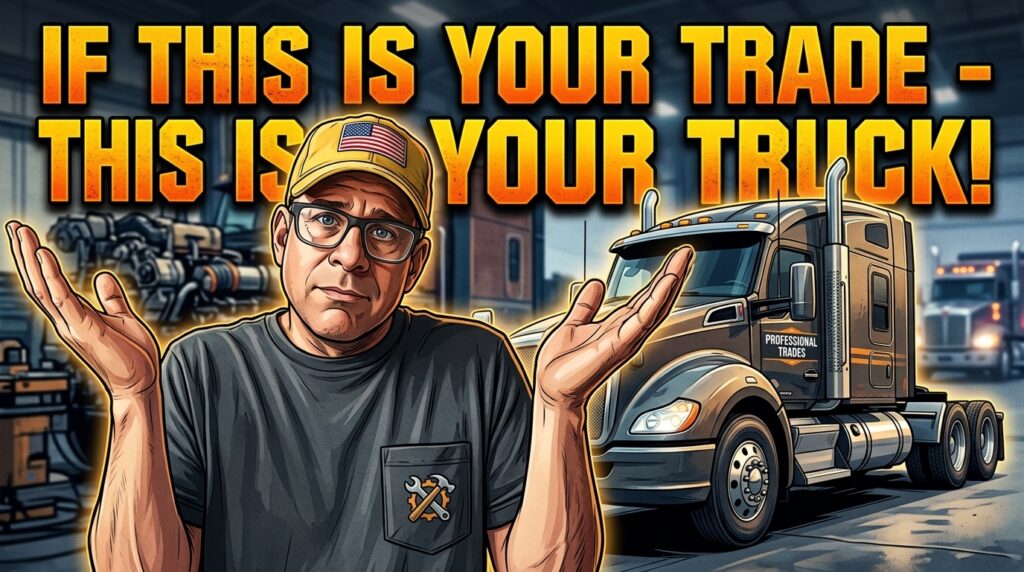
If This Is Your Trade – This Is Your Truck!
You can walk through any job-site parking lot in America and tell exactly what a man does for a living just by looking at the truck he climbed out of. That’s the whole point of If This Is Your Trade – This Is Your Truck! I’m JV Charles, founder and senior editor at JV CHARLES TV, and after more than thirty years on the tools—from union carpenter to project manager to senior inspector I’ve watched every one of these trucks roll up, idle, and spit out the same crew day after day. The truck never lies. It tells the story of the trade, the paycheck, and how far that guy has climbed the ladder in the skilled trades.
Key Takeaways
- The truck in the parking lot is the fastest way to read a man’s trade, experience level, and whether he’s still grinding or already living the Six Figures Zero Debt life.
- Electricians and commercial HVAC guys tend to drive the newest, most decked-out trucks; roofers and laborers still roll the oldest vans that somehow keep running.
- Payload, tool storage, and reliability matter more than chrome when the work is real.
- A clean, well-organized truck often signals a man who’s moved past helper wages into solid high paying skilled trades money.
- The right truck for your trade is the one that pays for itself either by carrying more work or by becoming a side-hustle asset.
I’ve seen it so many times it stopped being funny years ago. The parking lot is a mirror. Let’s walk through it the way I see it every morning.
The Electrician’s Truck
The electrician is the king of the job-site lot. He’s almost always in a late-model Ford F-250 or Ram 3500. Lift kit. Thirty-five-inch tires. LED light bar across the roof that has never once been switched on. Matching aluminum toolboxes that look like they were installed in a showroom. Everything is clean, everything is labeled, and the bed is organized like a hospital cart. That truck says he finished his apprenticeship, got his journeyman card, and started stacking real money. In a lot of markets those guys are already deep into the highest paying skilled trades territory once they add commercial or data-center work.
The Plumber’s Rig
Plumbers split two ways. The residential service plumber usually drives a clean cargo van Ford Transit or Ram ProMaster with shelves full of fittings, a water heater strapped in the back, and a magnetic sign that actually looks professional. The pipefitter or commercial plumber leans heavier: three-quarter-ton or one-ton pickup with a utility body or a flatbed. You can smell the PVC cement the second he opens the door. When that truck is newer and still has the factory paint, you’re looking at a guy whose plumbers pay has moved well past the median.
The HVAC Truck
Residential HVAC techs live in cargo vans or half-ton pickups with ladder racks and a lot of refrigerant tanks. Commercial mechanical guys step up to heavier trucks or box vans because they’re hauling compressors, sheet-metal sections, and control panels. The cleanest HVAC trucks usually belong to the guys who got into controls or refrigeration and stopped chasing pure service calls. Those are the ones quietly banking the bigger checks.
The Carpenter and Framer
Union carpenters and finish guys often drive mid-size or full-size pickups with a ladder rack and a tool box that has seen better days. Framers are a different breed—crew-cab trucks with plywood, nail guns, and extension cords everywhere. The truck that still has the original radio and a cracked windshield usually belongs to the guy still on the tools. The one with a clean interior and a laptop on the passenger seat? That’s the project manager or the guy who just started his own crew.
The Roofer’s Classic
Roofers still love the old Chevy Express or Ford E-Series van. Six guys piled inside, a six-foot stack of ladders on the roof, one brake light out, and a rosary or a faded team sticker on the rearview. It’s not pretty, but it gets the crew and the materials to the job. When a roofer finally upgrades to a newer truck with a proper rack system, you know the business is making money.
The Welder and Ironworker
These guys need payload and space for bottles, grinders, and lead. Three-quarter-ton or one-ton trucks with flatbeds or service bodies are common. Traveling welders and ironworkers often have the most miles and the most stickers from different job sites. The truck that looks like it’s been through a war usually belongs to the guy who’s been paid well for the travel.
The Heavy Equipment and Civil Crew
Operators and heavy-civil guys show up in the biggest trucks on the lot F-350s, Ram 3500s, sometimes even duallys. They’re towing trailers or carrying parts for machines that cost more than most houses. Clean or dirty doesn’t matter as much as whether the truck can pull the load without complaining.
Why the Truck Matters More Than You Think
In the trades careers world the truck is not just transportation. It’s a rolling résumé, a mobile warehouse, and sometimes a side-hustle machine. I’ve watched guys turn the same truck that carries their tools into a weekend hauling operation that covers the note. I’ve also watched guys buy trucks they couldn’t afford and spend the next three years stressed about the payment.
The men who treat the truck like a tool instead of a status symbol tend to move up faster. They keep it maintained, they organize the bed so they waste less time looking for parts, and they eventually use that same truck to start taking side work or small contracts. That’s how a lot of the blue collar guys I know crossed into real ownership money without ever going back to school.

Matching the Truck to the Stage You’re In
If you’re still an apprentice or helper, a reliable used half-ton or a basic cargo van is plenty. Get the work done, keep the payments low, and put the extra money into tools and certifications. Once you’re journeyman and the overtime is consistent, step up to something that can carry more inventory and look professional when you pull up to a commercial job. When you start running your own jobs or your own crew, the truck becomes part of the brand. Clients notice.
I’ve seen the full cycle more times than I can count. The kid who showed up in a beat-up Civic ten years ago is now the guy parking the clean F-250 with the company logo. The truck changed because the paycheck changed. And the paycheck changed because he treated the trade like a career instead of just a job.
That’s the real story behind If This Is Your Trade – This Is Your Truck! The parking lot never lies. Look around the next time you pull in. You’ll know exactly where every man stands and you’ll know what your own truck is saying about you.
Stay sharp out there. More real talk coming soon on JV CHARLES TV.
Frequently Asked Questions
Does the truck really tell you how much a guy makes?
Most of the time, yes. Newer, well-equipped trucks usually belong to men who have moved past entry-level wages. Old workhorses often belong to the guys still grinding or running lean operations.
What’s the best truck for a new apprentice?
Something reliable and cheap to insure. A used half-ton or a basic cargo van keeps the focus on learning the trade instead of making payments.
Should I buy new or used?
Used is almost always smarter until your income is consistent. New trucks depreciate fast and the payment can eat the early raises.
Can the truck become a side hustle?
Absolutely. Many tradesmen use the same vehicle for weekend hauling, debris runs, or furniture moves. Done right, it can cover its own note.
Do clients care what truck I drive?
Commercial clients notice organization and reliability. Residential customers notice cleanliness and whether you look professional when you pull into the driveway.
References
- Direct observation from more than thirty years on construction and industrial job sites across multiple states
- Current 2026 work-truck and cargo-van market data from major manufacturers (Ford, Ram, Chevrolet)
- Industry conversations with electricians, plumbers, HVAC technicians, carpenters, and roofers still working the tools
- Bureau of Labor Statistics occupational data for context on trade earnings and career progression