I Make More Than College Grads (Here’s My Pay Stub)
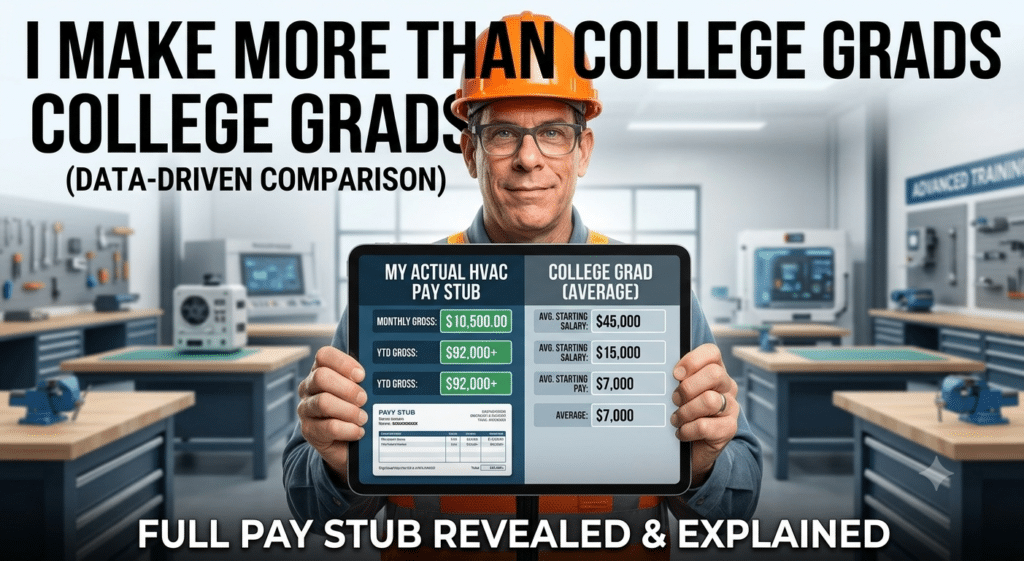
I Make More Than College Grads, and before you roll your eyes thinking it’s just another brag, let me show you the actual pay stub that proves it. I’m pulling in solid money week after week in the trades careers with zero student loans dragging me down, and after 30-plus years doing this, I want you to see what’s possible in skilled trades without the four-year degree trap.
Hey, I’m JV Charles, founder of JV CHARLES TV. I’ve been in the blue collar world my whole life from hammering nails as a union carpenter, to managing big projects, to my current role inspecting at a major auto plant. The numbers on my check aren’t made up, and they’re more common in high paying skilled trades than most folks realize.
Key Takeaways
- Real blue collar pay in skilled trades like electrical, HVAC, and plumbing often beats average college grad starting salaries with no debt.
- My recent stub showed over $1,800 gross in one week adding up to strong yearly earnings through base pay, overtime, and shifts.
- Many in highest paying skilled trades are out-earning median college outcomes while building six figures zero debt.
- Apprenticeships let you earn while learning, flipping the usual debt script.
- The labor shortages mean good opportunities if you pick the right path and put in the work.
Breaking Down My Actual Pay Stub
Here’s what a regular week looks like for me. Straight time for 39 hours came to about $1,521. Then some overtime premium added another $185 or so. Shift differential and a few other bits pushed the gross to $1,816 for that week. Nothing crazy, just consistent. Over the year, that kind of pace lands well into the six-figure conversation when you factor everything.
I didn’t get here overnight. It took years of showing up, learning the craft, and stacking skills. But I never had to borrow tens of thousands for a degree that might not even lead to a job in the field.
Why So Many Tradespeople Now Out-Earn College Grads
The old story that college is the only way to a good life is cracking. Average college grad starting salaries sit around $59K–$68K depending on the source, with plenty carrying $30K+ in loans. Meanwhile, experienced folks in skilled trades electricians, plumbers, HVAC techs are hitting medians in the low-to-mid $60K range, with top earners and those with OT or specialties going much higher.
And tradespeople start earning years earlier. No four years of sitting in lectures while debt piles up. An apprentice often makes decent money from day one.
I’ve seen the data and lived it. About 47% of skilled trade workers are now out-earning the median college graduate when you look at the full picture. That’s not every trade or every person, but it’s a growing reality, especially in high-demand areas.
The Real Math: Trades vs College Over Time
Let’s keep it simple. A young person going the trade route might start at 18 earning while learning. By 22, they’re often a journeyman making solid pay with zero debt. The college path? Four years later, maybe starting at $50K–$60K but owing money every month.
Over ten years, the gap gets wide when you add in lost earnings and loan payments. Many trades open doors to business ownership too, which is where some of the biggest earners come from.
Of course, certain degrees like engineering or computer science can pay very well. But for a lot of general business, communications, or social science grads, the numbers don’t look as strong.
My Path and What It Took
I didn’t wake up making good money. Started at the bottom, learned from older guys, took every chance to get better at the fundamentals reading prints, estimating jobs, communicating on site. Over time, that led to better roles and better pay.
In HVAC, plumbing, electrical, and other high paying skilled trades, the same pattern holds. Master the basics, specialize where demand is hot, and the money follows.
Common Pushback I Hear All the Time
People say, “But your body will break down.” Fair point physical work takes a toll. That’s why I always tell folks to learn smart, use proper techniques, and build skills for less physical roles like estimating or managing as you get older. Plenty do it successfully.
Another one: “Trades don’t have the same prestige.” Maybe not, but they sure do have the respect of homeowners and businesses who need things fixed yesterday, and the bank account reflects it.
How to Start Building Your Own Strong Paycheck
If you’re young and deciding, look seriously at apprenticeships in skilled trades. If you’re already working, focus on certs, side gigs that grow, or moving into higher-demand specialties.
Check local unions, contractors, or training programs. Resources like the ones we talk about on JV CHARLES TV can help point the way without the fluff.
FAQs About Trades Pay vs College Grads
Do trades really pay more than degrees?
In many cases yes, especially when you factor in no debt and earlier start. Top trades often match or beat average college outcomes.
What’s a realistic starting point?
Apprentices can earn $18–$25/hour while learning, with raises as they progress.
Can you still make six figures?
Absolutely. Many electricians, plumbers, HVAC leads, and business owners do through experience, OT, and ownership.
What if I already have some college debt?
Trades paths can help you pay it off faster with steady income and no new borrowing.
How do I pick the right trade?
Look at local demand, your interests, and physical fit. HVAC, electrical, and plumbing are strong everywhere.
References
- BLS wage data and comparisons for 2026.
- Real pay examples and insights from trades experience shared on JV CHARLES TV.
The pay stub doesn’t lie. Good money is out there in blue collar work for those willing to learn a craft. If my story or the numbers resonate, dig deeper and see if one of these trades careers fits you. We’ve got more real talk like this on the channel come join the conversation.
JV Charles, Founder & Senior Editor, JV CHARLES TV