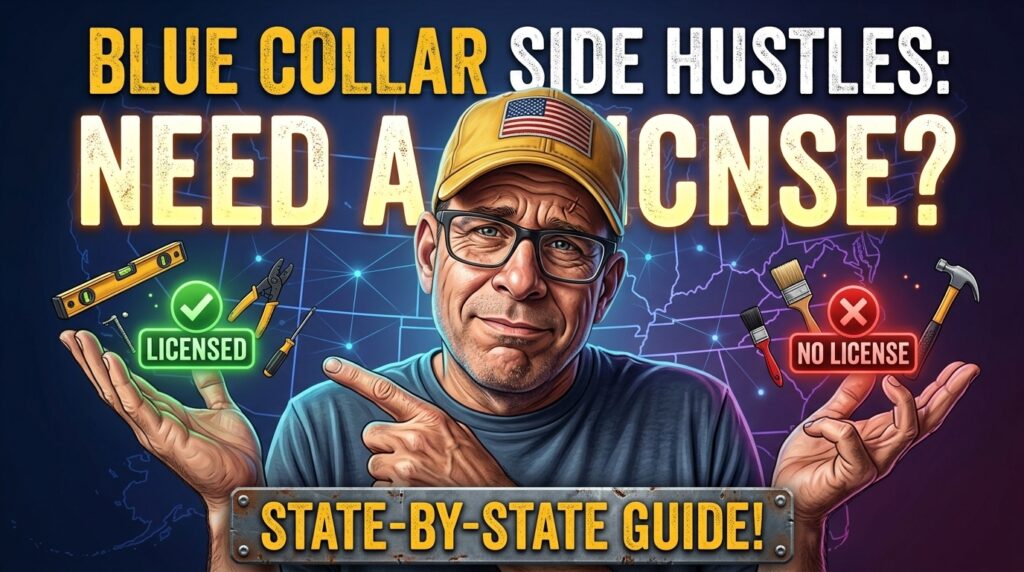
Do You Need A License For These Blue Collar Side Hustles? State-By-State
Do you need a license for these blue collar side hustles? State-by-state answers matter more than most people think. A lot of guys jump into weekend work without checking the rules and end up with fines or worse. I’ve seen it happen. After more than 30 years in the trades union carpenter, project manager, factory inspector I know how fast a simple side hustle can get complicated if you cross the wrong line.
I’m JV Charles from JV CHARLES TV. This is the practical breakdown for common blue collar side hustles. The rules change by state and even by city, so this is the big-picture guide. Always double-check your local board before you take the first job. The goal is to help you stay legal while building toward six figures zero debt in the skilled trades.
Key Takeaways
- Most basic side hustles (pressure washing, lawn care, light handyman work under a dollar limit) do not need a full contractor license in many states.
- Electrical, plumbing, and HVAC work almost always require a proper trade license, no matter how small the job.
- Local city or county business licenses and permits often apply even when the state does not require a contractor license.
- Dollar thresholds are common stay under them and many states let you operate without a state license.
- Getting this right protects your path in trades careers and keeps the higher-paying opportunities open.
The One Rule That Applies Almost Everywhere
No matter what state you’re in, electrical work beyond simple fixture swaps, plumbing beyond minor repairs, and HVAC work (especially anything involving refrigerant) require the right trade license. A handyman exemption does not cover those. That rule is consistent across the country.
For general side work the picture changes a lot by location.
Common Side Hustles and the License Reality
Pressure Washing / Exterior Cleaning
In most states you mainly need a local business license and general liability insurance. A few states (California, Arizona, and some others) treat it more like contractor work above certain dollar amounts or require a specialty classification. Always check for wastewater or environmental rules in your city.
Lawn Care / Landscaping / Leaf Removal
Usually the lightest requirements. Many places only need a local business license. Some cities require registration or pesticide applicator licenses if you spray anything. No statewide contractor license in the majority of states for basic mowing and cleanup.
Basic Handyman Work (painting, drywall patch, door hanging, TV mounting, minor repairs)
This is where the dollar thresholds matter most.
- Many states allow unlicensed work under $500–$2,500 per job (labor + materials).
- California, Nevada, Arizona, and a few others have lower or stricter limits and enforce them.
- Even in “no license needed” states, your city or county may still require a business license or registration.
Plumbing Side Jobs
Almost always needs a license if you’re doing more than the simplest maintenance. Plumbers pay stays strong partly because the barrier to entry is real. Master or journeyman licensing rules vary, but unlicensed plumbing work is heavily restricted in most places.
HVAC Side Jobs
Same story. EPA 608 is federal for refrigerant handling. Most states also require a state or local HVAC/mechanical license for installation or major repair work. Side calls that involve systems usually need the proper credentials.
Electrical Side Jobs
Licensing is required in the large majority of states for anything beyond swapping a fixture or outlet in some limited cases. Local rules can be even tighter.
How States Generally Break Down
States fall into rough groups:
- More lenient for general work: Places like Texas, many Midwest states, and some Southern states often push regulation to the local level and allow small jobs without a state contractor license.
- Stricter thresholds: California, Nevada, Arizona, and several others set lower dollar limits and enforce contractor licensing more aggressively.
- Trade-specific strict: Plumbing, electrical, and HVAC stay regulated almost everywhere, even if general handyman work is lighter.
Local rules stack on top of state rules. A state with “no statewide license” can still have cities that require registration, bonds, or insurance.

What You Should Do Before Taking the First Job
- Look up your state’s contractor licensing board website.
- Check your city or county business license requirements.
- Confirm the rules for the exact type of work you plan to do.
- Get basic general liability insurance most customers and platforms expect it.
- Keep jobs under any published dollar threshold if you’re operating without a contractor license.
Doing this right keeps you out of trouble and builds a clean reputation. That reputation is what turns side work into something bigger in the high paying skilled trades and the highest paying skilled trades.
Frequently Asked Questions
Can I do small handyman jobs without any license?
In many states, yes if the job stays under the local dollar threshold and does not involve electrical, plumbing, or HVAC systems. Always verify.
Do I need a license just to pressure wash driveways?
Usually no state contractor license, but a local business license and insurance are smart and often required.
What happens if I work without the required license?
Fines, stop-work orders, and in some places the inability to collect payment or get insurance coverage. It’s not worth the risk.
Does having a day-job trade license cover side work?
Sometimes, but not always. Check whether your license allows independent work and whether the side jobs fall under its scope.
Should I form an LLC before starting?
Not always required on day one, but it becomes smart once the side hustle grows. Liability protection matters.
References
- State contractor licensing board guidelines and 2026 handyman exemption thresholds.
- Common practices reported by independent trades operators for pressure washing, lawn care, and light repair work.
- Federal EPA Section 608 requirements for refrigerant handling.
- Local business license patterns across major U.S. cities and counties.
The side hustle game in the skilled trades still works. You just have to play it clean. Check the rules for your state and city, stay inside the lines that apply to your work, and protect yourself with insurance. Do that and you can build real extra income without putting your main career or your reputation at risk. That’s how you keep the path to better trades careers and six figures zero debt open.