HVAC vs Plumbers Pay in 2026: Which Trade Actually Rules?
Hey folks, it’s JV Charles here, founder and senior editor of JV CHARLES TV. If you’ve been watching my channel or following along with our deep dives into Trades Careers, you know I’m all about cutting through the noise on Skilled Trades and showing real people how to build Six Figures Zero Debt lives without drowning in student loans. Today we’re tackling a question I get asked constantly: HVAC vs plumbers pay which one comes out on top in 2026?
I’ve spent years talking to techs, journeymen, contractors, and apprentices in the field. The truth? Both high paying skilled trades deliver strong earnings in the blue collar world, but they reward different strengths. Let’s break it down with the freshest 2026 data so you can decide which path might rule for you.
Key Takeaways Right Up Front
- Plumbers hold a narrow edge on national median pay (around $63,000–$65,000) compared to HVAC techs (around $61,000), but top earners in both smash six figures.
- Location, experience, certifications, and going independent matter way more than the trade name.
- HVAC often offers faster entry and strong growth from climate demands and new construction.
- Both paths support Six Figures Zero Debt especially if you avoid college debt and stack overtime, specialties, or your own business.
- Demand stays hot for both highest paying skilled trades thanks to retiring boomers and infrastructure needs.
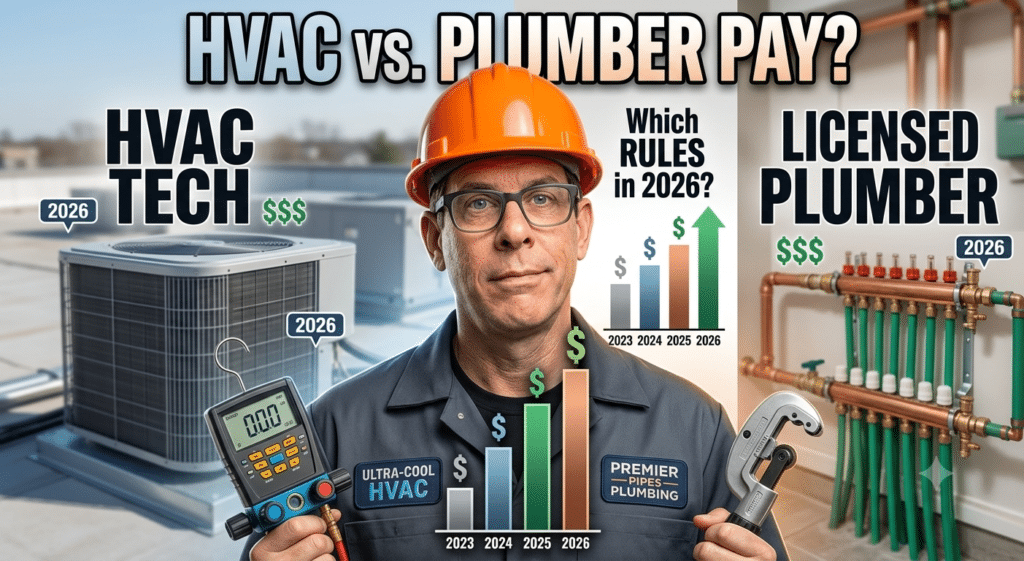
National Salary Showdown: HVAC vs Plumbers in 2026
According to the latest Bureau of Labor Statistics and industry reports rolling into mid-2026, here’s the real picture:
Plumbers (including pipefitters and steamfitters):
- National median: ~$63,800–$65,400 per year.
- Entry-level (apprentices): $38,000–$45,000.
- Experienced journeymen: $65,000–$85,000+.
- Top 10%: $105,000–$108,000+, with self-employed masters and contractors hitting $100k–$200k+ in strong markets.
HVAC Technicians:
- National median: ~$61,000 (some sources cite $59k–$61k, with service techs around $71k median in certain breakdowns).
- Entry-level: $40,000–$47,000.
- Senior techs and leads: $70,000–$90,000+.
- Top earners (managers, commercial specialists, business owners): $118k+ for service managers, up to $175k in sales or ownership roles.
Plumbers win the median battle by a few thousand bucks nationally, but HVAC can pull ahead in commercial work, high-demand seasons (think brutal summers or winters), or with management gigs. Overtime and emergency calls boost both trades significantly many techs I talk to on JV CHARLES TV add $10k–$20k+ annually that way.
What Drives the Pay Gap (or Lack Thereof)?
Experience and Certifications
Both trades reward time on the job. Apprentices start earning while learning, which is huge for Six Figures Zero Debt. Plumbers often need longer apprenticeships (4–5 years) for licensing, while HVAC can get you working faster with EPA 608, NATE, or manufacturer certs. Senior HVAC roles or master plumbers with gas/medical specialties see the biggest jumps.
Location Matters A Lot High-cost or high-demand states pay premium:
- California, New York, Alaska, Hawaii, Massachusetts often top lists for both, with medians pushing $80k–$100k+.
- Union work, commercial projects, or areas with big infrastructure booms (data centers, housing) amplify earnings.
Self-Employment and Business Ownership
This is where the real money shows up in blue collar careers. Running your own crew or service company lets plumbers and HVAC pros clear six figures consistently. HVAC might edge out on big-ticket installs (new systems run $6k–$15k jobs), while plumbing shines on emergency volume and maintenance contracts.
Job Outlook
HVAC often shows stronger projected growth (6–9%) due to energy efficiency, heat pumps, and climate shifts. Plumbing stays rock-solid (around 4–6%) with consistent residential and commercial demand.
Pros and Cons: Real Talk from the Field
I’ve heard it all on the channel. HVAC work can mean rooftops in summer heat or crawlspaces in winter, but diagnosing smart systems feels rewarding. Plumbers deal with some nasty stuff but get called for true emergencies that homeowners pay premium for. Physical demands exist in both, but good tools, helpers, and pacing help.
Many guys transition between them or cross-train. The Skilled Trades world rewards versatility.
How to Hit Six Figures in Either Trade
- Start smart: Apprenticeship or accredited program earn while you learn.
- Cert up: EPA, NATE, journeyman/master licenses, specialties.
- Chase volume: Overtime, nights/weekends, commercial contracts.
- Go independent: Build a business. Many JV CHARLES TV viewers do this and never look back.
- Relocate if needed: High-pay states or growing cities.
Both high paying skilled trades beat the national average and crush college debt traps.

Which One Rules for You in 2026?
Plumbers might have the slight median pay advantage right now, but HVAC’s growth, faster entry in some markets, and big commercial upside make it a contender. Honestly? Pick based on what clicks for you interest in systems (HVAC) vs. pipes and fixtures (plumbing), your tolerance for certain work environments, and local opportunities.
The real winner is anyone who gets after it in the blue collar world. No four-year degree required, just skills, hustle, and smart moves toward Six Figures Zero Debt.
What do you think HVAC or plumbing? Drop your experiences in the comments. If you’re considering a jump into Trades Careers, hit subscribe on JV CHARLES TV for more real-talk guides, salary breakdowns, and success stories.
FAQs
Q: Do plumbers make more than HVAC techs?
A: Slightly on national medians in 2026, but it varies hugely by location, experience, and business ownership. Top earners in both exceed $100k easily.
Q: How long to reach good pay?
A: 2–5 years to journeyman level for solid middle-class income; 5–10+ years or ownership for six figures.
Q: Is one easier to get into?
A: HVAC often has shorter initial training paths.
Q: Can you really hit six figures with no debt?
A: Absolutely that’s the beauty of these highest paying skilled trades.
References
- U.S. Bureau of Labor Statistics OEWS and projections (2025–2026 data).
- Industry reports from HVACJobsHQ, PlumberSalary.com, and related 2026 analyses.
- Aggregated state and metro data from WageByState, Indeed, and trade-specific sites.