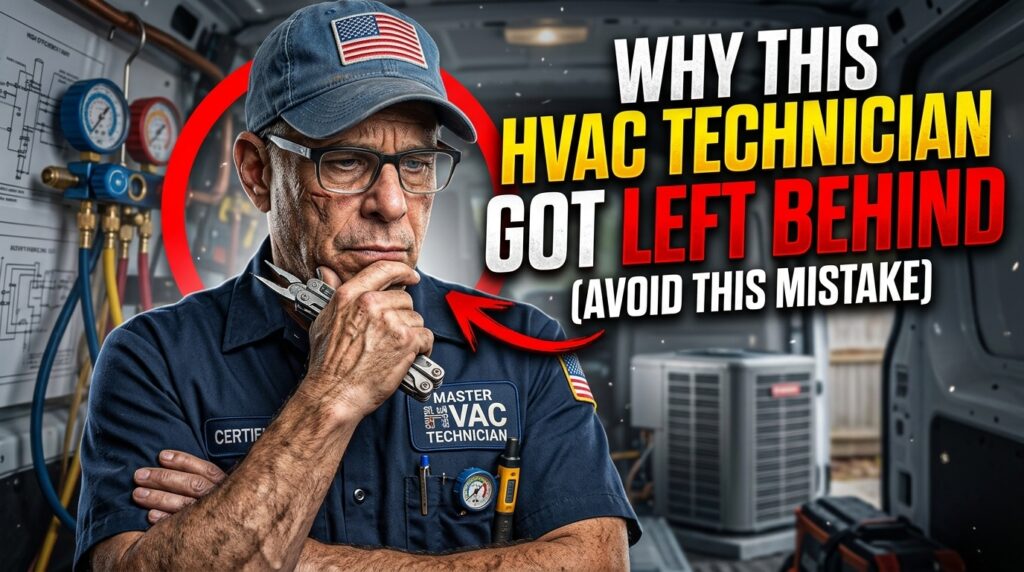
Why This HVAC Technician Got Left Behind (Avoid This Mistake)
Look, I still hear people say why this HVAC technician got left behind (avoid this mistake) and it hits close to home. It wasn’t some random warning. It was a solid tech showed up every day, fixed the usual problems, never caused drama and then the calls slowed down. Raises stopped. The company started giving the better work to the guys who could read the new systems. That phrase stuck with me because I’ve watched it happen more than once.
I’m JV Charles, founder and senior editor at JV CHARLES TV. I’ve spent over 30 years in the trades union carpenter, project manager, UAW inspector. I’ve seen whole crews get left behind when the work changed and they didn’t. Right now that change is hitting HVAC hard. The techs who keep doing things the old way are the ones getting left behind. The ones who upgrade are the ones companies fight to keep.
Key Takeaways
- HVAC companies are quietly splitting their crews into two groups: the ones they protect and the ones they replace. The difference is three practical skills, not years on the job.
- Smart diagnostics, IoT and building automation knowledge, plus energy performance work can move a regular tech toward six figures zero debt.
- Data center cooling, commercial controls, and VRF systems are creating some of the best-paying work in the skilled trades right now.
- You can start building these skills this week with free tools and manufacturer training. No big school bill needed.
- The same mistake keeps costing people money: treating the job like it never changed.
The Industry Just Made a Decision About You
In 2026 the systems coming into homes and buildings look nothing like what most of us trained on. They have sensors, digital controls, and built-in fault detection. Manufacturers are loading smarter diagnostics into new equipment. The old method of staring at a unit for 45 minutes and swapping parts until something works is getting exposed fast.
Companies are sorting their people. Experience still counts, but it is no longer enough by itself. The tech who can pull data before climbing the ladder, work with building automation, and talk about energy performance is becoming hard to replace. The tech who cannot is watching his value drop even while demand for blue collar workers stays high.
National pay for heating and cooling techs sits in the high $50Ks to low $60Ks for the middle of the pack. Top earners and specialists clear $90K and more. Data center and controls work often pays higher still when you add overtime and per diem. Plumbers pay and electrician wages sit in the same general range, but the specialty premiums in HVAC are real right now because of AI data centers and tighter energy rules. The shortage is still measured in tens of thousands of open jobs, yet the better-paying work goes to the people who can handle the new equipment.
That’s the mistake a lot of good techs make. They assume the old skill set will keep paying the same forever.
Skill 1: Smart Diagnostics Stop Guessing, Start Reading the Data
Most of us already know how to use a multimeter. That’s the baseline. The real step up is learning to read the information the equipment is already giving you.
New systems spit out diagnostic reports. Free tools like Measure Quick connect with Bluetooth, run the numbers on superheat and sub cooling, flag problems, and even make a report you can show the customer. You can see what’s wrong before you open the cabinet. The AI can suggest likely causes, but it still needs a tech who understands installation quality, airflow quirks, and the little things you only notice when you’re standing in front of the unit.
Techs who get good at this finish more calls in a day with fewer callbacks. More completed work means more revenue. That makes you the last person the company wants to lose. Download the free diagnostic tools your company already uses. Volunteer to learn the companion apps for the brands you install. That one move puts you ahead of most techs in your area.
Skill 2: IoT and Building Automation — Become the System Integrator
Residential smart thermostats are the easy version. The real money sits in commercial building automation systems, digital controls, and the networks that tie everything together.
Data center cooling is growing fast because those servers cannot go down. Techs who understand precision cooling and monitoring often earn more than standard residential or light commercial rates. Even outside pure data centers hospitals, schools, office buildings the systems are going connected. Sensors in every zone, cloud dashboards, the ability to diagnose from the truck before you walk in the door.
Learning the basics of BACnet (the common language these systems speak) and getting familiar with Carrier, Trane, or Johnson Controls training turns a regular HVAC tech into a system integrator. Those roles pay more because fewer people can handle both the mechanical side and the digital side.
VRF systems are another growing area. Diagnosis takes specific knowledge most residential techs never pick up. Add that on top of what you already know and jobs start competing for you.
Skill 3: Energy Performance — The Part That Multiplies Your Value
This one surprises people. It’s not only about fixing what’s broken. It’s about making systems run better and proving the savings.
Energy codes keep getting tighter. Rebates and utility programs reward measured results. Short programs like BPI energy auditor training or similar continuing education give you the language and credentials that open higher-value work audits, commissioning, performance contracts. Building owners and companies will pay for someone who can document lower energy use and better comfort.
When you can diagnose, connect the controls, and then optimize the system, you stop being just another tech. You become the person who protects the customer’s money and the company’s reputation at the same time. That combination supports the path toward high paying skilled trades income without student debt.
How These Three Skills Work Together
One skill helps. All three together create real leverage. A tech who can pull smart diagnostics, understand the automation layer, and speak energy performance can take the complex calls that other crews avoid. Those calls pay better, have fewer callbacks, and build the reputation that leads to raises, better shops, or even ownership.
The guys who got left behind usually made the same error. They stayed comfortable with the systems they already knew. The industry moved. They didn’t. Trades careers reward the people who treat learning as part of the job, not something that stops after the first card.

What You Can Start Doing This Week
- Download Measure Quick or whatever diagnostic app your company uses and run it on a couple of systems.
- Ask for access to the manufacturer training portals for the brands you service.
- Look up basic BACnet info and the free resources from the big controls companies.
- Check short continuing education options through NATE or BPI many are practical and not expensive.
- Talk to the senior guys or the service manager about which commercial or specialty work is coming in. Position yourself for the next training spot.
None of this means quitting your job or taking on debt. It means treating the next year as the window that separates the replaceable from the ones companies keep.
I’ve watched the highest paying skilled trades open up for people who stayed curious and upgraded. The opposite is also true. The phrase why this HVAC technician got left behind (avoid this mistake) exists because the mistake is still common. Don’t make it.
The industry is deciding right now who stays valuable. Make sure you’re on the right side of that call.
Frequently Asked Questions
Can an HVAC technician really hit six figures?
Yes. Specialists in data center cooling, commercial controls, industrial refrigeration, and business owners regularly clear $100K when you add overtime, per diem, and strong markets. National averages sit lower, but the ceiling is real for people who develop the skills above.
Is HVAC still a solid career in 2026 with all the new technology?
Demand is still strong tens of thousands of openings, an aging workforce, and new cooling needs from data centers and efficiency rules. Technology is raising the bar, not wiping out the need for skilled people. The techs who adapt are in a better spot than ever.
Do I need expensive courses or more certifications to stay relevant?
Not always. Free and low-cost manufacturer training, diagnostic apps, and short online modules cover a lot of ground. Targeted certifications help, but starting with the tools already available is enough to begin standing out.
How does HVAC pay compare to plumbing and electrical right now?
The three trades sit in a similar range nationally. Plumbing and electrical sometimes edge a bit higher on median pay. Specialty HVAC work especially controls, chillers, and data centers can outpace the others. Local markets, union status, and overtime matter more than national numbers.
What’s the biggest mistake that gets techs left behind?
Assuming the job never changed. The systems, the diagnostics, the customer expectations, and the company priorities have all shifted. Keeping the same approach from five years ago is the fastest way to become the tech companies quietly replace.
References
- U.S. Bureau of Labor Statistics Occupational Outlook Handbook and wage data for heating, air conditioning, and refrigeration mechanics and installers (latest available releases).
- Industry reports on technician shortages and retirement trends.
- Manufacturer product updates and training resources from major equipment and controls companies.
- Public tools and training information from Measure Quick, NATE, BPI, and related organizations.
- Field observations and conversations with working technicians shared through JV CHARLES TV.