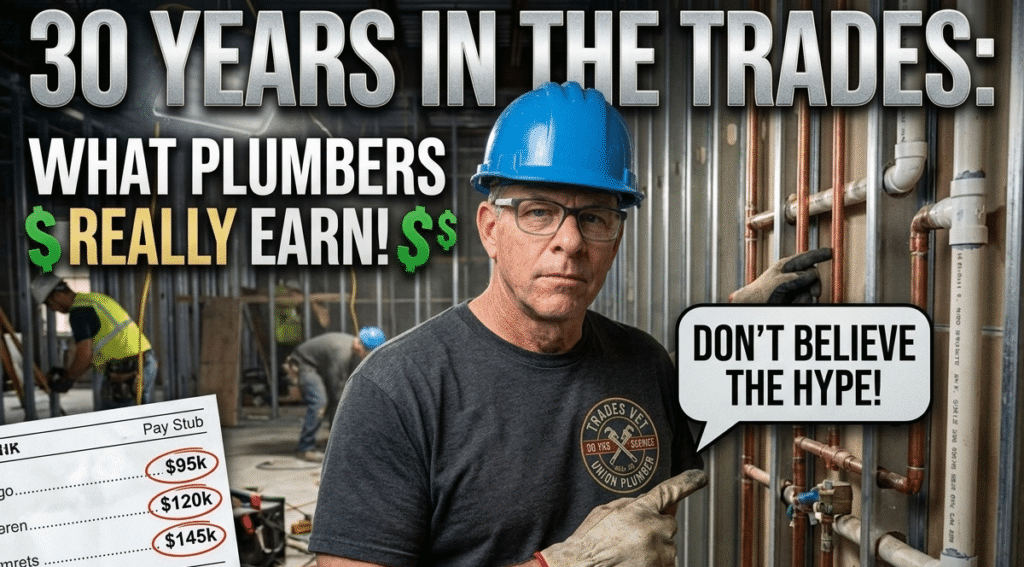
I Spent 30 Years in Trades — Here’s What Plumbers Really Earn
If you searched for real numbers on plumbers pay because the hype online got old, you’re in the right spot. I’ve spent thirty years around these jobs, and on JV Charles TV we tell it like it is. Plumbing keeps coming up when people talk about blue collar work that can actually get you to decent money without a mountain of debt. But it ain’t the easy path some make it sound like.
Most folks picture a plumber just unclogging toilets for quick cash. That’s part of the job, yeah. The bigger picture in 2026 is a trade that stays busy when everything else slows down, pays well once you climb up, and lets a lot of guys reach six figures zero debt if they stick around long enough and treat it serious.
Here’s the straight version of what plumbers pay looks like right now, how you actually get there, and how it lines up against something like HVAC.
Key Takeaways
- New apprentices start around eighteen to twenty an hour. It feels slow while you’re hauling pipe and figuring things out.
- Once you hit journeyman, thirty-five to fifty an hour is normal in a lot of places. Union spots and busy cities can run higher with the full package.
- Masters and especially guys running their own service trucks are the ones clearing six figures some pushing one fifty to two hundred thousand once they’ve got steady work and a good name.
- Most places want four or five years of apprenticeship before you can even test for journeyman. Master license takes more time after that.
- Service and repair work usually beats new construction on pay because emergencies and problem-solving jobs charge more.
- This trade is about as recession-proof as it gets. Water still leaks, sewers still clog, gas still needs certified hands.
- Your body takes a beating if you’re not careful. Backs and knees wear out fast on this work. The mental side with codes and liability is just as heavy.
What the Money Actually Looks Like These Days
National averages hover around sixty to sixty-five thousand a year, but that number doesn’t tell the real story. Pay jumps hard depending on how far along you are and what kind of work you do.
Apprentices start low. Eighteen to twenty an hour is common. You’re carrying material, digging, and learning while the older guys show you how not to screw up. It drags at first, but that’s how almost everybody comes up in this trade.
Journeyman level is where it starts feeling worth it. After that apprenticeship and passing your test, you’re looking at thirty-five to fifty an hour depending on where you live and whether you’re union. Strong markets push the total package higher with benefits. Non-union can be a little lighter on the hourly but still lets good hands make solid money if they stay busy.
The guys clearing real money are the masters and the ones who go out on their own. Licensed masters running service work are regularly hitting six figures. Some push one fifty to two hundred thousand or better once they’ve built a reputation and keep the van rolling on good calls. Business owners who add a couple reliable techs can go higher in the right areas.
Overtime, nights, weekends, and specialty jobs like commercial or medical gas add up quick. You don’t get that sitting around waiting for it.
How It Stacks Up Against HVAC and Other Trades
People always want to know how plumbing compares to HVAC. Both are strong high paying skilled trades that don’t need college. HVAC techs often see similar journeyman money, sometimes a little more in commercial or with controls work. Plumbing tends to have that extra steady demand though people always need water and waste systems working, no matter what the economy’s doing.
Electricians and some pipefitters can edge ahead on the high end too, especially union commercial stuff. But plumbing has this built-in essential factor that keeps shops booked. Once you’re a sharp master with your own service business, the ceiling sits right up there with the highest paying skilled trades. Six figures isn’t some rare thing if you put the years in.
It really comes down to what kind of work you can stand. If you like figuring out messed-up systems and dealing with people when their house is underwater, plumbing fits. If you want more tech or controlled environments, HVAC might feel better. Both can get you to the same money if you’re willing to grind.
Getting In Without Drowning in Debt
Most states run a four to five year apprenticeship. You work in the field and pick up classroom hours on codes and safety. Shops usually supply the big tools early while you build your own kit over time. You’re earning while you learn instead of paying big money to sit in school.
After journeyman you keep stacking hours and experience. Master license comes later with more time and another test. That license is what opens the better pay and the chance to run your own thing.
You don’t need to go deep in debt for this. Plenty of guys start right after high school or with a short intro program. The real cost is time and sweat. That’s why it keeps showing up when people talk about six figures zero debt you build the skills on the job instead of owing for a degree you might not even use.
Service Work Beats New Construction on Pay
New construction can be steady. You’re on big jobs running pipe with a crew. It pays okay once you’re journeyman. But a lot of the better money lives in service and repair.
Service means you’re the one rolling up when somebody’s got water everywhere at ten at night or their main line backed up on Thanksgiving. Those jobs pay more because people are desperate and need it fixed now. Good service plumbers learn how to talk to customers about real options instead of just patching things. That trust turns into repeat calls and referrals, and that’s how a lot of guys move into real money faster.
Union or Non-Union — Pick What Fits You
Union shops in good areas often give better total pay, benefits, and a pension, especially on big commercial work. The downside can be stricter rules and less say on what jobs you take.
Non-union gives you more freedom to chase service work or start your own truck sooner. Hourly might start a touch lower, but skilled guys still do well if they’re good at what they do and build their own book of business.
There’s no perfect answer. It depends on your local scene and whether you want the structure or the flexibility to build something yourself.

The Hard Parts Nobody Puts on the Brochure
This work is dirty. You’re in crawl spaces, attics, dealing with sewage and smells that follow you home. The physical side catches up with a lot of guys bad backs, wrecked knees, shoulders that don’t work like they used to. If you don’t stretch, lift smart, and take care of yourself, you’ll feel it later.
There’s real weight to it too. Gas leaks can hurt people. Bad plumbing can make folks sick. One mistake and you’re looking at liability that doesn’t just go away. Codes change, jobs get complicated, and you’re always learning or you fall behind.
It starts rough. You carry pipe, dig trenches, and feel lost for the first couple years. The ones who make it are the ones who keep showing up, stay humble, and don’t complain every time it gets hard.
I’ve seen plenty of guys come in excited about the money and then quit when their body started hurting or they realized it wasn’t just turning wrenches all day. The ones who last respect the work and treat it like a real craft.
Is It Still Worth It Right Now?
For the right person, yes. It’s essential work that can’t get shipped overseas or replaced by a computer. Demand stays steady because buildings need working systems. Once you’re licensed and skilled, the pay can get you to six figures and give you something that’s actually yours.
But it asks for real grit. If getting filthy, working in tight nasty spaces, or dealing with stressed-out people when things are flooding bothers you more than a desk job ever would, this probably isn’t your trade. If you like solving actual problems with your hands and your head and you’re willing to put the years in, it’s one of the stronger paths out there.
FAQs
How long until the money gets good?
Apprenticeship is usually four to five years before you can test for journeyman. That’s when pay moves up. Serious six-figure stuff usually takes more time and experience after that, especially if you go independent.
Can you hit six figures without owning your own business?
Yeah, especially in strong union areas or with lots of overtime and specialty work. But the guys clearing the highest numbers most consistently are usually the ones running their own service operations.
Is plumbing better paying than HVAC?
They’re close on journeyman level. Plumbing often has steadier demand and better emergency pricing. HVAC can pull ahead in some commercial or tech-heavy roles. Pick the work you can actually stand doing every day.
What’s the fastest way guys mess this up?
Thinking the big money comes quick or that it’s mostly physical labor. The mental side troubleshooting, codes, talking to customers is what separates the ones who earn from the ones who stay stuck.
Do I have to go into debt for tools and training?
Most apprenticeships let you earn while learning, and shops cover a lot of the big stuff early. Build your own tools slow. Plenty of guys get through with almost no debt if they’re careful.
Is the work really as nasty as people say?
It is. Sewage, crawl spaces, attics in the heat. If that turns your stomach more than the idea of sitting at a computer, look at something else.
References
- JV Charles TV YouTube video from February 2026: “I Spent 30 Years in Trades — Here’s What Plumbers Really Earn” — main source for pay ranges, apprenticeship details, and real talk on the trade.
- 2026 salary reports from ServiceAgent, Skillit, Fieldcamp, Workiz, and BLS data showing national medians near $63k with journeyman pay commonly $55k–$75k+ and master/owner earnings significantly higher in service work.
- Union and regional pay comparisons from industry sources confirming stronger total packages in union markets.
- Trade comparisons highlighting plumbing’s steady demand alongside HVAC and other high paying skilled trades.