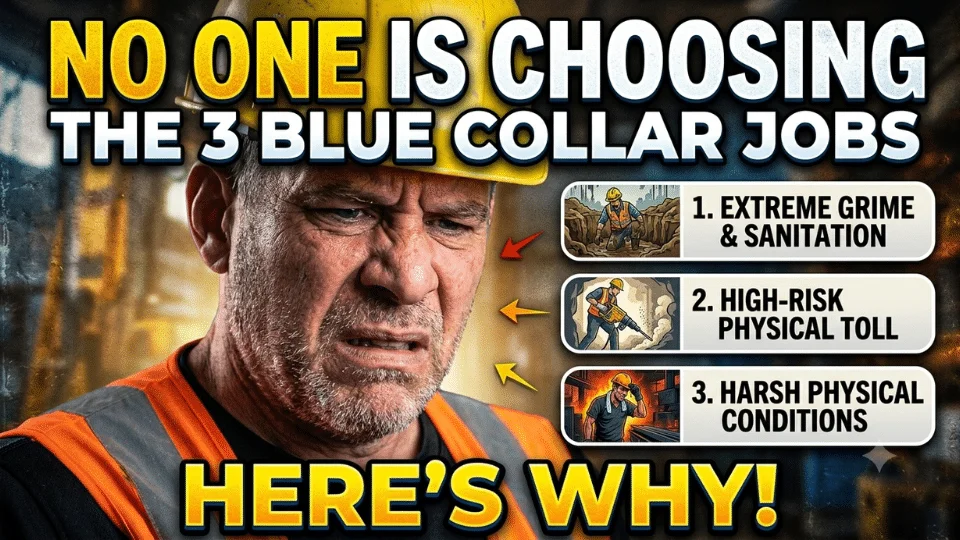
No One Is Choosing These 3 Blue Collar Careers — Here’s Why
If you find yourself looking at the job market right now and wondering, “Why is No One Is Choosing These 3 Blue Collar Careers — Here’s Why,” I’m about to give you the honest truth. It isn’t because the money is bad. It definitely isn’t because the work is drying up. It’s because of a powerful stigma. And for the guys smart enough to ignore that stigma, it’s exactly what is protecting their massive paychecks.
I’m JV Charles, the founder and senior editor of JV CHARLES TV. With over 30 years in the dirt and on the steel as a union carpenter, project manager, and UAW inspector, I’ve worked shoulder-to-shoulder with almost every trade out there. Right now, there are three specific Trades Careers that most people can’t even define, yet the guys working them are out-earning almost everyone else on the job site. The fact that nobody wants them is the biggest advantage you could possibly ask for.
Key Takeaways
-
The Stigma Trap: Jobs labeled as “too dirty,” “too dangerous,” or simply unknown create artificial worker shortages.
-
Massive Leverage: Because fewer people apply for these jobs, the workers inside them command premium wages and elite benefits.
-
AI Proof: While algorithms replace office workers, robots and automation actually create more demand for these specific hands-on roles.
-
The Big Three: Boilermakers, Millwrights, and Ironworkers are currently dominating the earning potential in the construction and industrial sectors.
The Stigma Protecting the Paycheck
Let me explain a concept I call the “stigma trap.” It works like this: a job gets labeled by society as too dangerous, too physical, or too obscure. People hear those labels and instantly cross the job off their list without ever looking at the actual pay, the benefits, or the market demand.
Because everybody is running in the opposite direction, a massive shortage is created. That shortage drives wages through the roof. And while everyone is obsessing over standard blue collar paths like looking up a basic hvac certification or getting jealous over standard plumbers pay the guys inside these three obscure careers are pulling down premium rates with zero competition.
If you want a path to Six Figures Zero Debt, stop looking where everyone else is looking. Let’s break down the three careers you need to pay attention to.
Career 1: The Boilermaker
The primary stigma keeping people away from becoming a boilermaker is pretty straightforward: folks think it’s dangerously physical, and honestly, most people don’t even know what a boilermaker actually does.
What Does a Boilermaker Actually Do?
A boilermaker assembles, installs, maintains, and repairs boilers, vats, and massive pressure vessels that hold liquids and gases under extreme pressure. You’ll find these guys in power plants, oil refineries, chemical processing facilities, and shipyards.
The Salary and the Leverage
This is one of the highest paying skilled trades in America for a reason. The work involves welding, heavy rigging, and fitting in confined spaces or at extreme temperatures. Because of that, the median salary is around $73,000, with top earners easily pushing past $85,000.
But it gets better. Boilermaker welders (guys who combine this trade with an AWS welding certification) routinely break six figures. Throw in overtime, Davis-Bacon prevailing wages, per diem, and shutdown bonuses, and you can hit $120,000 in peak years. Here is the game-changer: there are only about 16,000 boilermakers in the entire United States. The ratio of available jobs to applicants is wildly in your favor.
Career 2: The Millwright
The stigma with the millwright is even simpler: it’s totally invisible. Most guidance counselors have never even uttered the word.
The Surgeons of the Industrial World
A millwright installs, dismantles, and repairs heavy industrial machinery. We are talking about conveyor systems, turbines, generators, assembly lines, and robotic systems in massive manufacturing plants. They use lasers, precision measuring tools, and heavy rigging to align machines down to the thousandth of an inch. When a production line at a Ford plant goes down and costs the company thousands of dollars a minute, the millwright is the guy they call.
Automation is Creating, Not Destroying, These Jobs
Here is the counterintuitive truth about this path in the Skilled Trades: the more automated the world gets, the more millwrights we need. Robots don’t install themselves. Somebody has to bolt them down, calibrate them, and fix them when they inevitably break. AI isn’t replacing this job; it is literally creating it.
Average salaries run from $63,000 up to $80,000, but guys working in major industrial hubs like Houston, Detroit, or Chicago are pulling $100,000+. For guys who love solving puzzles and working with precision, this is the best-kept secret in high paying skilled trades.
Career 3: The Ironworker
This one is about to blow up, but the stigma keeps the faint of heart away. The stigma? Heights. You are working on steel beams hundreds of feet in the air.
Building the Skeleton of America
Ironworkers install and reinforce the structural steel frameworks used in skyscrapers, highways, stadiums, bridges, and massive data centers. They connect the steel columns using rivets, bolts, and welds in every kind of weather condition imaginable. It’s physically demanding, it requires serious grit, and it is widely considered one of the most respected positions on any job site.

Riding the Infrastructure Boom
Salaries range from $50,000 to $90,000, but union ironworkers in major metros like New York or Chicago regularly clear well over $100,000 with overtime. And overtime is basically guaranteed right now.
America is currently navigating the largest infrastructure boom in decades thanks to the Trillion-Dollar Infrastructure Investment and Jobs Act. Every single bridge, highway, and massive tech data center being built requires structural steel, which means it requires ironworkers. It’s legacy work, and it pays exactly like it should.
The Old Playbook is Broken
The traditional narrative of taking on massive debt for a four-year degree just to fight for a $45,000 entry-level cubicle job is falling apart. Careers like boilermaker, millwright, and ironworker prove that you don’t need a degree to build serious wealth.
The careers that most people avoid are exactly the careers that pay the most per applicant. That’s the stigma trap working perfectly. The fewer people who apply, the more leverage the workers have. If you are willing to do the jobs nobody else wants to do, you’ll earn the kind of living nobody else gets to have.
FAQs
What is the difference between a boilermaker and a regular welder?
While both use welding skills, a boilermaker specifically works on vessels, tanks, and vats that hold extreme pressure (like power plant boilers). It requires highly specialized rigging, fitting, and safety protocols beyond standard structural welding.
Do I need a college degree to become a millwright?
No. Entry is typically through a 4-year registered apprenticeship where you earn while you learn, or a 2-year associate’s degree in industrial maintenance. You can literally start with a high school diploma and a solid work ethic.
Is being an ironworker really as dangerous as people say?
It involves working at extreme heights with heavy materials, which inherently carries risk. However, modern safety standards, union training, and strict OSHA regulations make it much safer today than it was in the past. If you follow the protocols and respect the iron, it’s a highly rewarding career.
Why are these three specific trades paying so much right now?
It comes down to supply and demand. Because of the stigmas attached to them (danger, heights, or just being unknown), very few young people are entering these apprenticeships. Meanwhile, infrastructure spending and industrial automation are driving demand for these skills through the roof.
References
-
JV Charles TV. (2026). No One Is Choosing These 3 Blue Collar Careers — Here’s Why [Video]. YouTube.
-
United States Bureau of Labor Statistics (BLS) Occupational Employment and Wage Statistics for Boilermakers, Millwrights, and Ironworkers.
-
The Infrastructure Investment and Jobs Act (Federal Infrastructure Spending Reports).
-
International Brotherhood of Boilermakers Union Apprenticeship Data.
-
United Brotherhood of Carpenters (UBC) Millwright Training and Wage Information.