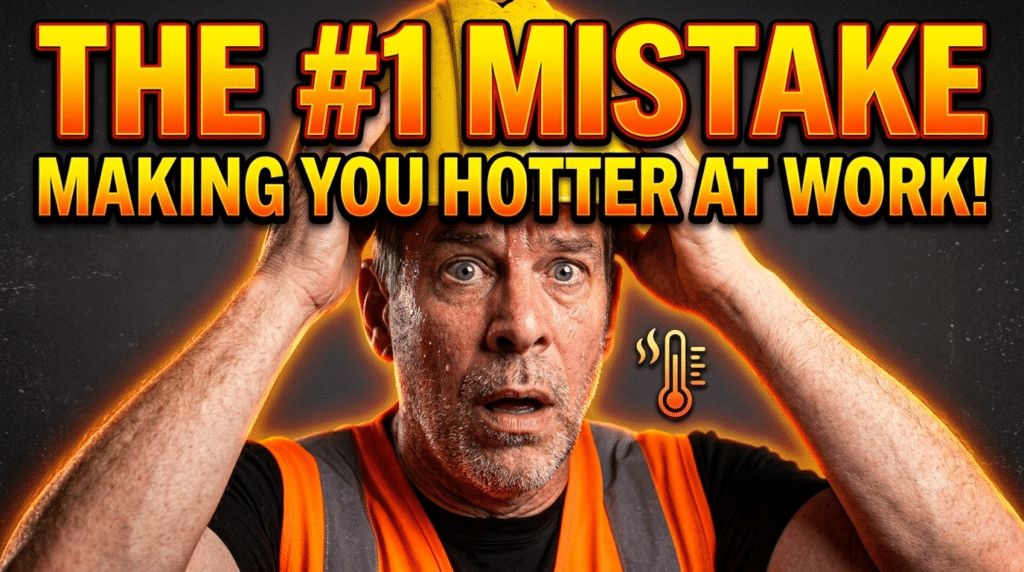
The #1 Mistake Making You Hotter At Work
Every morning around 5:30 a.m., thousands of guys grab whatever cheap white or black shirt is sitting on top of the laundry pile and head out to the truck. It feels fine while you’re drinking your morning coffee. But by 10:00 a.m. on a July job site, you are absolutely baking.
I’m JV Charles, founder of JV CHARLES TV. After spending more than 30 years working blue collar jobs outdoors, I can tell you right now that throwing on that cheap cotton t-shirt is the #1 Mistake Making You Hotter At Work. Nobody explained this to me when I started out decades ago, but what you put on at 6:00 a.m. determines whether you finish your shift feeling strong or end up sitting in an urgent care lobby with heat exhaustion.
Being tough on the job isn’t about seeing how much heat you can tolerate until you pass out. It’s about working smart so you can keep showing up, earning a living, and going home safe to your family every night.
Key Takeaways
-
Cotton acts like a wet towel: Cotton absorbs up to 27 times its weight in water. Instead of letting your sweat evaporate to cool you down, it traps moisture against your skin like a heavy blanket.
-
Dark colors pull heat straight from the sun: A black or dark navy shirt can run 10 to 15 degrees hotter on its surface than a light gray or white shirt in direct sunlight.
-
Tight clothes ruin your air gap: Sweat needs moving air to evaporate. Tight shirts shrink-wrap your torso and kill the natural airflow your skin relies on.
-
A full summer gear upgrade costs around $100 to $200: Swapping out cheap tees for light-colored, moisture-wicking shirts and breathable work pants pays for itself almost immediately.
Why That Cheap Cotton Shirt Is Ruining Your Day
Nearly 28,000 workers get hurt every single year because of heat on the job site. Construction workers make up roughly 7% of the American workforce, but they account for a third of all heat-related deaths. That is a massive problem.
The worst part is that most guys make their day harder before they even step out of the house.
Your body cools itself down through a simple mechanism: you sweat, air blows over the moisture, and that sweat evaporates. Evaporation pulls heat away from your skin. It is your body’s built-in air conditioner.
Cotton completely breaks that system. Because cotton hoards water, your shirt gets soaked, heavy, and warm. Your brain thinks you’re still overheating, so it sends a signal to sweat even more. The shirt absorbs that sweat too. By noon, your t-shirt weighs twice as much as it did when you put it on, and you are literally wearing a heat trap. The military has said it for years: cotton kills.
The Three Big Outfit Mistakes
Most tradespeople make three major errors at the exact same time:
-
The Wrong Fabric: Wearing cotton that holds onto every drop of sweat you produce.
-
The Wrong Color: Choosing dark navy, black, or dark green shirts that absorb radiant heat from the sun.
-
The Wrong Fit: Wearing tight shirts that eliminate the tiny space between your skin and the fabric where airflow happens.
When you combine heavy cotton, dark colors, and a tight fit, you are making yourself 5 to 10 degrees hotter than you need to be all day long.
What Guys in High Paying Skilled Trades Actually Wear
You don’t need to buy ridiculous, overpriced clothing to fix this issue. You just need to look at what wildland firefighters and military crews wear when they have to work in extreme heat. If you’re running pipe, pulling wire, or working on an hvac unit in an attic, the gear principles stay the exact same.
Moisture-Wicking Synthetics
Look for shirts made from synthetic blends engineered to pull sweat away from your skin and spread it across the surface of the fabric so it dries quickly. Brands like Carhartt Force, the Brunt McKenna line, and Ariat Rebar make work tees that dry up to four times faster than standard cotton.
Lightweight Merino Wool
This sounds completely backward, but modern lightweight Merino wool is not the scratchy sweater your grandfather wore. It pulls moisture away from your body, regulates your temperature, and naturally resists odor-causing bacteria. You won’t end up smelling like sour sweat by lunchtime. It is easily one of the best-kept secrets in summer workwear.
Light Colors and UPF Protection
Pick white, light gray, khaki, or light blue. Light shades reflect sunlight rather than soaking it up, which drops the surface temperature of your shirt by 10 to 15 degrees.
Make sure your summer gear includes UPF 50+ sun protection. UPF-rated fabric blocks over 98% of harmful UV rays. Sunburned skin cannot sweat or regulate heat properly. Wearing a thin, light-colored, UPF-rated long-sleeve shirt will actually keep you cooler in direct sunlight than working in a short-sleeve shirt with bare arms.
Relaxed Fits Are Essential
You want clothing that is loose enough to let air pass through, but not so baggy that it gets caught on tools or materials. That small space between your skin and your shirt acts like a radiator. Give your skin room to breathe.
The Complete 4-Layer Cooling Setup for Summer
The guys who handle 95-degree heat without breaking down use a basic four-part setup:
-
Layer 1 (The Base): A loose, light-colored, moisture-wicking tee or long-sleeve with UPF 50+ protection. Expect to pay $25 to $45 per shirt.
-
Layer 2 (Head and Neck): A vented hard hat, a thin moisture-wicking skull cap to keep sweat out of your eyes, and a damp cooling towel draped around your neck.
-
Layer 3 (Pulse Points): Cooling wrist bands, or just running cold water over your wrists for 30 seconds during breaks. Lowering the temperature around your pulse points cools down blood returning to your core very quickly.
-
Layer 4 (Pants): Ditch heavy 12-ounce cotton canvas duck pants in June. Switch to lightweight ripstop nylon or stretch polyester work pants like Dickies Temp-iQ or Carhartt lightweight pants.
Upgrading two shirts, a pair of summer work pants, a skull cap, and a cooling towel will cost between $100 and $200 total. You’ll spend more than that on gas station energy drinks over the summer just trying to fight off heat fatigue.

Protecting Your Health and Your Paycheck
Working in extreme heat isn’t just uncomfortable it impairs your judgment.
A 2025 study published by researchers at George Washington University and Harvard showed that hot weather directly causes over 28,000 workplace injuries annually. When your body overheats, your reaction time slows down, your grip strength drops, and your decision-making gets sloppy. Heat stroke isn’t the only risk; simply getting too hot leads to dropped tools, slips, and bad calls on the job site.
If you want long, successful Trades Careers, you have to protect your physical health. Getting hurt or burning out prevents you from earning Six Figures Zero Debt in the Skilled Trades.
The workers making the most money in high paying skilled trades know that keeping your core temperature down is simple job prep. If you want to see that heavy plumbers pay check hit your account every week, you can’t afford to lose work days to preventable heat exhaustion. Take care of your body at 6:00 a.m. so you can do your job well and head home safe at the end of the day.
Frequently Asked Questions (FAQs)
Isn’t Merino wool too hot for 90-degree summer days?
Heavy wool sweaters are hot, but lightweight summer-grade Merino wool is thin and highly breathable. It handles sweat better than almost any synthetic material, keeps air moving across your skin, and prevents body odor build-up throughout long shifts.
Why wear long sleeves when it’s hot outside?
Direct sunlight baking your bare skin increases your body temperature and causes sunburns, which ruin your skin’s ability to sweat. A loose-fitting, light-colored long sleeve with UPF 50+ protection blocks direct UV rays and keeps you cooler than exposed skin.
How much does it cost to replace my work shirts?
A quality moisture-wicking work shirt costs between $25 and $45. Buying three or four to rotate through the week will run you around $100 to $150, which is far cheaper than taking an unpaid day off due to heat illness.
What if my company requires dark-colored uniforms?
If your employer requires dark navy or black shirts, focus heavily on the fabric blend and fit. Choose lightweight polyester or synthetic moisture-wicking fabrics instead of cotton, wear a loose fit, and use cooling towels on your neck during breaks.
References
-
George Washington University & Harvard University. (2025). Study on Workplace Injuries and Cognitive Impairment Linked to Heat Exposure.
-
JV Charles TV. (2026). “#1 Mistake Making You Hotter At Work.” YouTube. https://www.youtube.com/watch?v=GrT-p65ObGM
-
Occupational Safety and Health Administration (OSHA). Heat Illness Prevention Standards and Worker Safety Guidelines.